By Richard Feloni
The late Jim Paul went from a
poor Kentucky boy to serving on the board of governors of the Chicago
Mercantile Exchange through a series of lucky breaks and smart
investments. But his hubris grew alongside his success, and a series of
terrible investment decisions led to his downfall in 1983. His brokerage
firm took away his job, his reputation was ruined, and he lost $1.6
million, $400,000 of which was borrowed from friends.
Paul spent the rest of the
decade getting himself back on track. By 1990 he was working in the
futures research department at Morgan Stanley Dean Witter & Co.,
managing a team that included investment advisor Brendan Moynihan.
Moynihan broke down three of the
key takeaways, which he tells Ferriss are less about investing and more
"about the psychology of the mistakes we make."
We've summarized them below:
1. Internalizing failure will keep you from rebounding.
"When you lose money, people
tend to internalize that. They tend to equate self-worth with net
worth," Moynihan says, referring to the way that people tend to equate
their failures with their identity.
If you lose a massive amount of
money or suffer another big setback, you will be holding yourself back
from a rebound if you see yourself as a failure rather than someone who
failed.
It was this fear of being a
failure that kept Paul from aborting his investment in the soybean oil
trade, despite multiple indicators of a sharply declining market, Paul
and Moynihan write in their book. Looking back, Paul writes, he wishes
he would have simply accepted the failure and moved forward before
putting himself through even more difficulties.
2. There's a difference between risk-taking and gambling.
Being a smart investor requires taking many risks, and not all of
them will result in success. But smart high-risk decisions are still
very different from gambles, Moynihan tells Ferriss. Gamblers marry
their ego to their money, which is what Paul did.
"They want to be right. It's not about the money. In gamblers, that
is a disease...
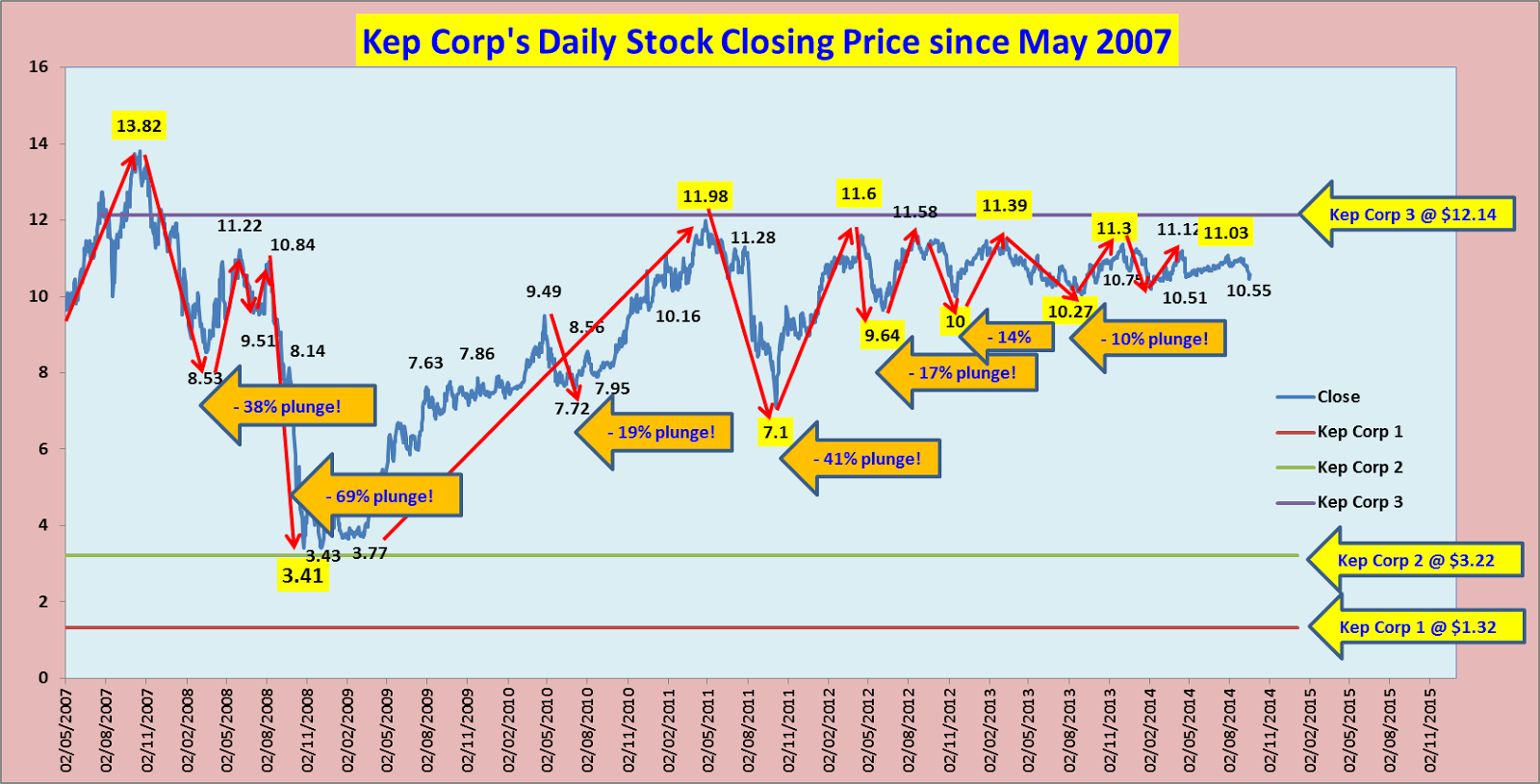
(CW8888: There is no difference from average down on a single stock. I am right. The market is not right. Let prove me it by putting in more money where the mouth is.)
Money is just a ticket to enter. They're there for the
adrenaline rush," Moynihan says.
3. Emotional decision-making is dangerous, especially when it's done as a group.
You're a human being. It's natural to have emotional reactions to
situations, whether positive or negative. Just make sure you learn how
to set feelings aside and look at something objectively before making a
decision.
Paul writes about an example of when he let his emotions guide his
trading, which he would do on an even grander scale with the soybean
investment that lost him over a million dollars.
In 1980, his business partner
told him he got a tip that a company was a potential takeover candidate
within the next two months at $60 per share. Paul ended up buying tens
of thousands of options when they were selling for just several cents
and told all of his clients to do the same. Within three weeks, the
stock rose to $38 and the options were each worth $4.
He could've made a hefty profit
by selling at this point, but he, his partner, and his clients pushed
each other to hold out for the rumored takeover. It would have made Paul
$7.5 million, and he and his fellow option-holders began tossing ideas
of grandiose vacations back and forth as the market closed on Friday. On
Monday, the stock opened down $6 and he learned that the rumored
takeover was off the table. The options were worthless.
In retrospect, Paul writes that
he saw this as a prime example of the dangers of groupthink, where he
and his fellow investors lost sight of the fact that they weren't
trading off reliable information.
Despite that, they actually had a
chance to all make plenty of money had they decided to sell that Friday.
He writes that it was a mistake to get wrapped up in a fantasy of
flying in the Concorde and staying at the Waldorf-Astoria, which clouded
his judgment.




 Posts
Posts


