I started serious Investing Journey in Jan 2000 to create wealth through long-term investing and short-term trading; but as from April 2013 my Journey in Investing has changed to create Retirement Income for Life till 85 years old in 2041 for two persons over market cycles of Bull and Bear.

Since 2017 after retiring from full-time job as employee; I am moving towards Investing Nirvana - Freehold Investment Income for Life investing strategy where 100% of investment income from portfolio investment is cashed out to support household expenses i.e. not a single cent of re-investing!

It is 57% (2017 to Aug 2022) to the Land of Investing Nirvana - Freehold Income for Life!


Click to email CW8888 or Email ID : jacobng1@gmail.com


Welcome to Ministry of Wealth!

This blog is authored by an old multi-bagger blue chips stock picker uncle from HDB heartland!

"The market is not your mother. It consists of tough men and women who look for ways to take money away from you instead of pouring milk into your mouth." - Dr. Alexander Elder

"For the things we have to learn before we can do them, we learn by doing them." - Aristotle

It is here where I share with you how I did it! FREE Education in stock market wisdom.

Think Investing as Tug of War - Read more? Click and scroll down


Important Notice and Attention: If you are looking for such ideas; here is the wrong blog to visit.

Value Investing
Dividend/Income Investing
Technical Analysis and Charting
Stock Tips

Sunday, 16 October 2011

Investing vs Trading (4) - Two great attributes of long-term investors


Read? Investing vs Trading (3) - Here the Hard Truth from me!

Two great attributes of long-term investor

What are they?

Super in FA? 

Super in both FA and TA?

One grand Master Guru from Hong Kong in the investment world has been holding some stocks (one of them is HSBC) for more than 20 years and collecting stock dividends from them. During the past and current market bears, he can still sleep well at nights. Why?

He uses simple strategy for buying, holding and selling for his favorite stocks (Createwealth8888: probably blue chips)

During market crisis, he would buy enough of his favorite stocks and stop buying more when he has enough of them and then wait for the bull market to come and sell enough of them to recover his capital. In this way, he keeps his "FREE" stocks in the market to receive stock dividends.

Grand Master Guru called them "FREE" stocks and Createwealth8888 called them "Pillow Stocks".

What did Grand Master Guru tell us?

Patience and Gut

The two great attributes of long-term investors for cash flow.

Patience to wait for big bears to come and GUT to put in enough capital to buy enough of them so that they will have enough to do partial divestment to recover the initial investment cost and make the leftover stocks FREE. Simply, repeat the whole process again at each market bear and market bull to accumulate more of them to generate more cash flow.

Many of us may have Patience but Gut may be lacking in us so it is very hard for us to put in large capital relatively to our account size to buy enough during market crisis; and then hold enough winning stocks for cash flow over decades. 20 years? OMG!


Saturday, 15 October 2011

Kep Corp - Worst is over???

Friday, 14 October 2011

Investing vs Trading (3) - Here the Hard Truth from me!


Look at the photo above. I am telling you it has happened in Singapore before. I was there and saw it with my own eyes. Read? 1978 Singapore floods That was old Potong Pasir. That is the Hard Truth on flooding. Will it happen again?

Read? Investing vs Trading (2)

Read? Buy Gold/Silver as insurance or hedge against inflation? (3)

At one of the famous chat box in Singapore, some day, I will hear some fellows shouting Long Keppy and on some other day I will hear some people shouting Short Keppy. It looked like Keppy (Kep Corp) is one of their favourite trading stocks. Indeed, if you asked me it is a good trading stock.

Now, the Hard Truth on investing vs. trading.

It is all about Timing the Market and Time in the Market. Both are equally important . You must get both right in order to make real big money from the stock market. However, traders will just need to get their Timing the Market more right than wrong to make consistent money; but the job of investors can be harder than traders. As they have to get both Timing in the market and Time in the Market right to make real big money from the stock market.

Just like the flooding in old Potong Pasir, I was there. I saw it. I know the Hard Truth of Flooding to the roof top is real. It is damn scary and damaging. I hope it will never happen again in Singapore.

Same for investing and trading as I have done it all before. Here is the Hard Truth from me.

Keppy the favourite trading stock

It happened to be my favourite stock too so I will have a story to tell.

Kep Corp at today closing market price of  $8.70

YTD Iinvesting TSR (%) = Total dividends received + Capital appreciation @ today closing stock price of $8.70
                              =  748% for 10.1 yrs (18 Sep 2001 to 14 Oct 2011)
                              =  74% per year
                              =  6.2% per month

To get that simiilar YTD total return of 748% in 10.1 years, I will have to trade Long/Short at net profit of 6.2% per month for every month for past 10.1 year. That will also mean plenty of TA charts to read to time the market for such returns. So what is the moral of the story?

You just need one CLICK at the Right Time at the Right Stock for same fruit of labour

You just need one click at the right time at the right stock and for that one time effort you may enjoy effortless of the same fruit of labour; otherwise you will have to labour every month for many years or even decade to get it. This is the Hard Truth on investing. This is Timing the Market and Time in the Market that counts for the real big money game.

You can call it luck. You call it gut.  Yes, I was second time lucky with the 2nd click in 2002 for Semb Corp and 3rd time lucky for third click for DBS in 2003.

Will I be lucky again in 2012/2013 if the Big Bear come visiting again for 4th, 5th, and 6th click?

Wait ... may be I have already done the 4th click for Biosensors as I have strong feeling that it may turn out to be my next multi-bagger.

Are you ready for one CLICK at the Right Time at the Right Stock at the next Big Bear?   


Thursday, 13 October 2011

Investing vs Trading (2)

Read? Investing vs Trading

10 years wedding anniversary

It is 10 years of joys and pains of sticking it together in good times and in bad times. But, when times are bad I always think of divorcing you as it hurts me badly.


 Kep Corp (18 Sep 2001 - 14 Oct 2011)

I have been riding it up and down across market cycles by collecting stock dividends and at the same time trading it over 93 rounds (see Kep Corp trades)

Joy

The total realized profits and dividends collected over the past 10 years is more than enough to pay for my two older children's 4-year university education and their personal living expenses. And dividend yield is good. (See? Kep Corp )


Pain

But, everytime when the Bear market hits again , it will come back to my mind whether I should sell it to lock in the profit and avoid riding it down one more time? Should I?

Re-making Portfolio to ride the Craziness of Market Cycles

Read? Investing Made Simple by Uncle8888 (28)

Read? More articles related to performance

"Insanity: doing the same thing over and over again and expecting different results" - Albert Einstein.

               This is how Market Cycles exist?


Market Value of our investment?


When the market value of our asset rises above our initial investment cost, we make an unrealized profit; but when the market value falls below our initial investment cost, we make an unrealized loss.

Does this unrealized profit/loss really matter to us if we are not selling yet and still happy with the cash flow generated by these assets?

Some stocks by nature can be very volatile and their market value can rise and fall quickly over days or even by hours. It is like taking a roller-coaster ride. If we focus too closely to their market value on daily basis, we may be taking an unnecessary and unwarranted emotional roller-coaster ride with the crazy stock market.

BTW, any unrealized gains in our stocks are just paper profits. It is just a number indicated in our monthly CDP statement. We can't buy food with these paper profits which are hiding somewhere in the databases of CDP's computer.

Similarly, any paper losses are just imaginary losses until the companies actually go bankrupt and then only no hope.

Learning from Property investors

Read? Property investors

Most property investors never formally evaluate the performance of their investments on daily basis and they are happy in receiving rentals and paying off mortgages.

For example,

If our neighbour A lost heavily in the casino and force to borrow a large sum of money from Ah Long. When he was unable to pay Ah Long; he was then forced to sell his flat to Ah Long at depressed price to pay up his debts. Do we bang our head against the wall when we heard that evaluation of a flat in our block was that low? No, right?

If our neighbour B sold his flat to a young couple who wanted to live near their parents and willing to pay high price and high COV of $40K. Do we jump up and put up our flat for sale too? No, right?

So what is market value of our investment?

We have a choice on how we perceive the value of our investment and especially for those volatile stocks:

  1. Mark to market value on daily basis and follow the craziness of the market up and down with the daily emotional swings.
  2. Mark to initial investment cost and ignore how the market perceive the value of our investment. But, we have to be very careful not to over-state the value of our investment and avoid self-denial of real losses.  So it is wiser to grossly under-state the value of our investment as capital protection strategy.
Re-making the current Portfolio since 2001

The stock market tends to be more volatile than the property market; but it doesn't mean I should be as crazy as the stock market and take the emotional roller-coaster ride by marking all my investment to the market value on daily basis. I realize that I don't need to do it?

I will split my current portfolio into two distinct portfolio - investment and speculative. Each portfolio will have its own purpose and will be tracked and measured differently and independently. In the past, when I look at my portfolio, I always feel that I am winning the investing game with big margin and tend to be complacent and lack of corrective actions.

Two distinct Investment and Speculative Portfolio


All stocks will be classified as speculative until they are proven to be capital protected and yield at least 6% in cash flow before transferring them to Investment Portfolio.

For investment portfolio, I will focus on sustainable cash flow and indicate the stock value to their initial investment costs and disregard any market value. These investment stocks will be growth-dividend stock with high margin of safety to their initial investment cost so that they can withstand market crashes as capital protection.

For speculative portfolio, it will be fixed capital at risks for speculating future growth-dividend stocks and hopefully over time I will be able to find more growth-dividend stocks to generate more cash flow in the investment portfolio.


Conclusion

In this way, I will have a smaller speculative portfolio to ride with the craziness of market cycles while maintaining sanity with a bigger, stable and capital protected investment portfolio. Sleep well at night even when market is wild and mad.

Read? Pillow Stocks Strategy (2)

I am practising 3M's in Investing and Trading - Method, Mind and Money management.

Now, the speculating mind will be just tracking and measuring the performance of the speculative portfolio and not confused by the past winning multi-baggers that are deceiving the speculative mind over its real performance.

Wednesday, 12 October 2011

DBS upsizes MTN programme to US$15b from US$10b

By YEO AIQI


DBS Bank Ltd announced on Wednesday that it has updated its US$10 billion debt programme to a US$15 billion global medium term note programme.

The local bank had prviously set up the US$10 billion debt issuance programme in June.

DBS said the net proceeds from the notes issue will be used for the general business purposes of the bank and its consolidated subsidiaries.

DBS, Bank of America Merrill Lynch, and Goldman Sachs (Singapore) Pte are the joint arrangers for the programme.

Shortly after the upsize, credit rating agency Standard & Poor's Ratings Services assigned the debt issue its A+ rating.

Tuesday, 11 October 2011

SWIBER SCORES WITH TWO MORE ORDER WINS OF APPROXIMATELY US$102.0 MILLION

- Strong order book visibility despite current market condition


Singapore – October 11, 2011 – Swiber Holdings Limited (“Swiber” or together with its subsidiaries, the “Group”), a world class integrated construction and support services provider to the offshore industry, announced that it has secured yet two more order wins totaling approximately US$102.0 million for offshore construction projects involving pipeline an subsea installation works in Southeast Asia. Both projects are scheduled to commenc immediately, with one project to be completed by 4QFY2011 and the other to be completed by 2QFY2013.

One of the contracts is from a new customer and another is a repeat order from an existing customer, both of which are major oil companies in Southeast Asia. These contract wins bear testimony to the Group’s strong asset and resource capabilities to meet the stringent requirements of its customers, who are mainly oil majors.

Commented Mr. Francis Wong, Group Chief Executive Officer and President of Swiber, “We are deeply encouraged by yet two more order wins notwithstanding the current market condition. While we continue to receive repeat orders from existing clients, we are also securing contract wins from new customers, signaling an endorsement of our consistently excellent service and timely deliveries.

“Our order book, which is well-diversified geographically, allows us to capture the varying peak seasonal demand for each region. This helps us to maximise the utilisation of our vessels, and allows us to spread our costs over a wider base of contracts, thus enhancing our cos competitiveness.

“Southeast Asia offers exciting opportunities for more contract wins given that Q4 is traditionally a strong quarter for awards of contracts in this geographic area.

Swiber has secured to date, new contract wins amounting to US$758.0 million in 2011 from oil and gas majors for work in Asia and the Middle East.

Singaporeans earning higher income

By CARINE LEE


Singaporeans experienced growth in individual and household incomes in the last decade, according to statistics released on Tuesday by the Ministry of Manpower and Department of Statistics Singapore.

The median monthly income of Singapore citizens from 2001 to 2010 grew by 2.9 per cent per annum in nominal terms to $2,588 from $2,000, or 1.2 per cent per annum in real terms.

Incomes of citizen-headed households grew by 3.4 per cent per annum in nominal terms to $1,520 from $1,083, or 1.8 per cent in real terms from 2000 to 2010.

Giant jackups potentially in 2012; KEP/SMM may benefit

Deutsche Bank AG/Hong Kong,

According to a recent article from Upstream, Norwegian state oil company Statoil is in talks with rig owners about ordering some of the largest jackup drilling rigs ever built. These rigs have been labelled Category‐J rigs and are planned for work on subsea completions. Statoil has requested expressions of interest from jackup owners and are expecting initial responses back in October 2011. If they decide to proceed, tenders could go out by 2012 with potential delivery by 2015. The group indicated that they want to address the problem of the ageing rig fleet in Norway, which ties in with our view that the rapidly ageing global rig fleet will remain a key factor driving the replacement cycle in this sector.

The article highlighted that leading candidates for this program could include Maersk Drilling, Seadrill, and Rowan. Other drillers that may also be interested include Odfjell, Awilco, Noble Drilling, and Ensco. Upstream indicated that Maersk has recently been screening the market for a possible order of the new GustoMSC‐design jackup, the CJ80. Their most recent orders have been for CJ70 rigs, two of which were placed with Keppel in early 2011 at about US$600m each (approximately US$500m per rig for the yard work) and are the largest jackups built to date. The dollar value for each CJ80 rig should be more than US$600m as these CJ80 rigs have variable deck loads that are higher than the 8000 tonne load of the CJ70 units.

We believe KEP and/or SMM are well positioned for the Category‐J rigs, with both being clear market leaders for high specification jackups. Of the three leading candidates for the new rigs, Maersk over the past 12 months has ordered 2 jackups with KEP, while Seadrill has ordered 3 jackups withSMM and 1 semisubmersible drilling tender with KEP. In 2007, Rowan ordered 4 jackups with KEP.

Monday, 10 October 2011

Memory of Asian Financial Crisis is back!

Createwealth8888: One of my relatives almost went bankrupt due to heavily into this share loan financing by pledging existing shares as collateral in order to make borrowings to maximise the potential of investments during Asain Financial Crisis.

Hong Leong Finance offers 1.5% interest rate


By CARINE LEE

Hong Leong Finance on Monday announced that for a limited period, customers who take up Express Share Loan for a three-month tenure with a minimum of $10,000 loan will enjoy a special interest rate of 1.5 per cent.

Hong Leong Finance offers 1.5% interest rate to celebrate its golden jubilee

Express Share Loan is a short-term secured credit facility which allows customers to pledge existing shares as collateral in order to make borrowings to maximise the potential of investments.

This offer is extended in conjunction with the finance company's golden jubilee, where its customer service staff will don three-piece gold coloured jacket suits in place of grey uniforms.

Lian Beng’s 1QFY12 net profit grows 76% year-on-year to S$19.3 million

  • 1QFY12 revenue increased 21% year-on-year to S$135.8 million


  • Cash generative operations contributed to cash position of S$181.4 million as at 31 August 2011

  • Order book of S$761 million as at 31 August 2011 provides continuous flow of activities

SINGAPORE, 10 October 2011 – One of Singapore’s home-grown listed construction groups, Lian Beng Group (“Lian Beng” or “the Group”) (联明集团) reports a 76% increase year-on-year in net profit to S$19.3 million in 1QFY12 from S$11.0 million in 1QFY11 on the back of a 21% increase yearon- year in its 1QFY12 revenue to S$135.8 million from S$112.3 million.

Following a record set of results for FY2011 ended 31 May 2011, the Group achieved steady revenue contribution from its core construction segment, property development as well as ready-mixed concrete segments in 1QFY12.

The improvement in the Group’s net profit margin was also due to a one-time gain of S$7.9 million from the sale of its New Industrial Road investment property. Correspondingly, the Group’s net profit margin improved by 4.4 percentage points to 14.2% in 1QFY12 from 9.8% in 1QFY11.

Net cash generated from operating activities amounted to S$32.6 million during the quarter under review. On an operationally efficient and cash generative structure, the Group cash and cash equivalents stood at S$181.4 million as at 31 August 2011.

Sunday, 9 October 2011

Invest in stocks listed in overseas stock exchanges is investing globally?

Just For Thinking ....

Read? Investing Made Simple by Uncle8888 (10)

Read? Major STI market cycles - Horrible Bears and Beautiful Bulls!

Why do we as local investors in Singapore have developed such thinking that if we don't buy some stocks that are listed in some overseas stock exchanges we are not investing globally.

Are there any strong reasons to justify our local big blue chips listed in  SGX e.g. Keppel Corp, Semb Corp, ST Eng, SingTel, DBS, etc have not diversified their businesses across globally or regionally enough to qualify as MNC in those countries where they have set up their global or regional presence to do businesses there.

Frankly speaking, I know a few fellow investors who have bought some stocks listed in some overseas stock exchanges. Are they currently doing better than me in term of real monetary gains after currency conversion and tax? I don't think so. Their absolute real returns with these global stocks will speak for themselves. So is Overseas moon still rounder, is it?

Saturday, 8 October 2011

Insights into successful investing

A look at empirical studies done by academics can help enhance an investor's performance


By TEH HOOI LING
SENIOR CORRESPONDENT

LAST week, Singapore Management University's (SMU) Sim Kee Boon Institute of Financial Economics organised a half-day seminar on 'The Opportunities and Challenges Facing the Asset Management Industry in Asia'.

One of the presentations was by Melvyn Teo, associate dean (research) of Lee Kong Chian School of Business at SMU. His topic was 'Insights for Investors from Empirical Research'.

I went through his presentation materials and found them interesting, and thought I'd share them with readers here.

Prof Teo highlighted four insights gleaned from empirical studies done by academics which could help enhance an investor's performance.

First is investor pyschology. There is a big field of study called behavioural finance which tries to shed light on the numerous human biases and irrationalities when it comes to investing, particularly in stocks and shares.

Overconfidence

Prof Teo picked one: overconfidence. Overconfidence leads to overtrading, and overtrading results in higher transaction costs. High transaction costs in turn eat into returns.

(Createwealth8888: Overconfidence is not limited to overtading. In investing, overconfidence can lead to investors building up very large position in a single stock e.g. more than 40 or 50% of their capital. They are so confident that their single stock will not turn out to be a mini or micro Black Swan in their portfolio)
A study by Barber and Odean, published in 2000, divided a cluster of investors into five groups, ranking them from those who traded the least to the most. The gross returns of all the five groups were quite similar. However, when it comes to net return, there is a clear relationship between the frequency of trading and net return. The higher the monthly trading volume or turnover, the lower the net return.

The average investor's net return, after accounting for transaction costs, is worse than simply putting money in the S&P 500 Index fund.

My take is that the study was published in the year 2000, probably based on data before 2000. Since then, the world has changed rather drastically. For one thing, stock markets have become a lot more volatile. Increasingly, there are more believers that investors have to actively manage their portfolios, ie trade, in order to preserve their wealth, and also to capitalise on the opportunities to buy assets on the cheap. Getting the timing right, of course, is the proverbial holy grail in investing.

While both men and women share the overconfidence trait, men are more overconfident in their ability to make financial decisions. As such, they tend to trade more. Barber and Odean, in a paper published in 2001, said that men traded 45 per cent more than women, and the trading reduced their net returns by 2.65 per cent a year as opposed to 1.72 per cent for women.

The difference between single men and women is even more pronounced. Single men traded 67 per cent more than single women, thereby reducing their returns by 1.44 per cent per year more than single women.

The second insight presented by Prof Teo related to market inefficiencies. The theory is that the market is efficient, and that the stock price should incorporate all the information that is publicly available about that particular security. 'However, investors suffer from limited attention. They are apt to purchase attention-grabbing stocks that have extreme returns, high volume and significant events,' said Prof Teo, quoting Barber and Odean.

One market inefficiency noted by Prof Teo is the customer/supplier links between firms. Sometimes, the market does not react immediately to the bad news announced by a stock's major supplier, or perhaps even its major customer. 'Investors may ignore these economic links in the short term, resulting in a lagged response of supplier prices to customer prices, and hence predictability,' said Prof Teo.

And when it comes to picking hedge funds, Prof Teo's own study has found that the closer a manager is to his or her investment region, the higher the outperformance.

Meanwhile, his analysis of Japan-focused hedge funds showed that hedge funds managed by native Japanese speakers outperformed those managed by non-native speakers by more than four percentage points a year. And among the non-native speakers, those who are closer to the market outperformed those further away by 2.5 percentage points a year.

Hedge fund managers' incentive structures also matter. According to Prof Teo, portfolios of hedge funds with performance fees and high water mark significantly outperform those with no high water mark and low performance fees.

In another study, Chevalier and Ellison tried to find out if certain types of managers generate better returns. They looked at 2,029 fund-years for growth, and income mutual funds between 1988 and 1994. They found that a manager who graduated from one of the best schools would be expected to achieve an annual return which was more than one percentage point per year higher than that of a manager who attended a school of median quality. Older managers performed worse than younger ones, while managers with MBAs earned about 60 basis points per year more than managers who did not.

Glamour stocks

Further analysis found that young and high-SAT test score managers tended to work for funds which charged lower expense ratios, that high-SAT managers and managers with MBAs tended to hold higher beta portfolios, that MBAs held more 'glamour' stocks, and that younger managers were more likely to be replaced after a bad year.

However, the superior performance of MBAs was fully accounted for when one adjusted for differences in the riskiness of the individual stock holdings. Meanwhile, a large portion of the superior performance of younger managers was attributable to their working for funds which charged lower expenses and to survivorship biases in that the poor performing managers were replaced by their firms, leaving only the better ones in the study sample.

The researchers however did find that there remained substantial performance differences between funds managed by managers from high-SAT schools and funds managed by managers from low-SAT schools which were not explained by observable differences in behaviour or by survivorship biases.

Indeed, a separate study done by Grinblatt, Keloharju and Linnainmaa based on data from Finland showed that Finns with higher IQs tended to have a greater participation rate in the stock market; and the higher the IQ, the better their performance.

Prof Teo's conclusions to the audience are:

Beware of behavioural biases such as overconfidence and their effects on your tendency to over trade;

Take advantage of mistakes that others make in the market;

Invest in securities that you possess an informational advantage in; and

Make sure that your manager is smart and well-incentivised to invest on your behalf so as to minimise agency problems.

Investing Made Simple by Uncle8888 (28)

Read? Investing Made Simple by Uncle8888 (27)

Twin Fears of not-so-rich retirees

Not-so-rich retirees may have twin fears:

  1. Inflation
  2. Bear market
Inflation

Inflation will eat away purchasing power and that will hurt not-so-rich retirees who are more likely to depend on their investment income coming from their accumulated wealth before retirement.

Bear market

Bear market will reduce the wealth level of not-so-rich retirees. It can also be wealth destructive if not-so-rich retirees have to liquidate part of their investment for cash flow during market low. Once this negative return in their investment portfolio is locked in during market low; it will become much harder for their portfolio to recover anywhere near its last peak.

Avoid liquidating any investment during bear market

Facing with one crisis after another, not-so-rich retirees must prepare for the worst bear market and build a resilient portfolio to survive in bear markets and avoid liquidating any investment for cash flow through good asset planning for cash flow.

Investment Income

Some common assets for not-so-rich retirees to receive investment income:

  1. Fixed Income from bonds (capital protection)
  2. Dividend income from stocks (capital at risks)
  3. Rental from properties (investors believe properties are safer than stocks so the risk is lower)
Uncle8888's Investment and Cash flow model


Uncle8888 is preparing for the worst and avoid liquidating any investment during market low by ensuring that his fixed income and top up from dividend income will be more than enough to meet his basic living expenses during the bear market. In bad times, he will just need to tighten his belt and in good times he will enjoy upgraded life style without worrying too much about his investment and cash flow during bear market.

He will reuse his existing strategy of spending his year-end bonus for his retirement income. Read? Spending year-end bonus and that means he will be spending his last year EARNED income in the current year. In this way he will have absolute control to decide whether to spend freely his EARNED income or retain part of it during bad time to ease the pain for the following year when the economy is not looking good.

How? Will this model work for you if you are retiring soon?

Friday, 7 October 2011

Drillers are getting more cautious!

Drilling behemoth Ensco has hatched an option for a rig newbuilding at Keppel Fels but has let a further optional contract go.


Createwealth8888: Similarly like AOD. More worry of future financing in 2012 /2013???

AOD has an option for construction of one more jack-up rig at Keppel FELS Limited that matures on 30 September 2011. The Board of AOD has resolved to not exercise this option.

Keppel to build third Super A Class jackup for Ensco at US$245 million

Singapore, 7 October 2011 - Keppel FELS Limited (Keppel FELS) has secured a contract to build an enhanced KFELS Super A Class harsh environment jackup rig from Ensco plc (NYSE: ESV) for US$245 million. The rig is scheduled for delivery in 3Q 2014.


This contract arose from the exercise of an option which was part of Ensco’s order of two KFELS Super A Class rigs on 10 February 2011.

Mr. Dan Rabun, Chairman and CEO of Ensco plc, said, “Ensco’s new series of jackup rigs are enhanced versions of the KFELS Super A Class design that will provide increased levels of efficiency for customers. By building these new Super A Class jackups, we will continue Ensco’s tradition of delivering leading customer service with one of the largest and youngest premium jackup fleets in the world.

“Standardisation across our 11 KFELS design rigs improves reliability for customers as we benefit from more efficient construction, training, daily operations, inventory management, and repairs and maintenance.”

Thursday, 6 October 2011

Pillow Stocks Strategy (2)

Read? Pillow Stocks Strategy

What will make an investor feel most comfortable with his investment?

  • FirstlyReturn of Capital.
  • Secondly, Good Yield.
  • Lastly, Capital appreciation.
That is the reason why many investors will jump into bonds or perference shares when yield are good and when they become available in the market.

Dividend Investing Strategy

A 10% dividend yield stock will return you your capital in 10 years; and thereafter let you enjoy good yield and capital appreciation

Pillow Stock Strategy

If you believe that dividend investing strategy will work for you; but you may feel that 10 years is just too long to wait. Then think Pillow Stock Strategy. It will help you to:

  • Firstly, Return of Capital.
  • Secondly, Good Yield.
  • Lastly, Capital appreciation.
"Pillow stocks are the best stocks to hold over market cycles." - Createwealth8888


Steve Jobs: Build Your Dreams!

The specch from Stanford Graduate Commencement address delivered by Steve Jobs on June 12, 2005. Some key quotes:


"If you live each day as if it was your last, someday you'll most certainly be right."

"Death is the destination we all share, no one has ever escaped it. And that is as it should be because death is very likely the single best invention of life."

"Remembering that I'll be dead soon is the most important tool I've ever encountered to help me make the big choices in life. Because almost everything — all external expectations, all pride, all fear of embarrassment or failure - these things just fall away in the face of death, leaving only what is truly important. Remembering that you are going to die is the best way I know to avoid the trap of thinking you have something to lose. You are already naked. There is no reason not to follow your heart."

"The only way to do great work is to love what you do. If you haven't found it yet, keep looking. Don't settle. As with all matters of the heart, you'll know when you find it."

* Steve Jobs co-founded Apple with Steve Wozniak in 1976, and a year later launched the Apple II - the first desktop computer to have a built-in keyboard, built-in sound and that could produce color graphics when hooked to a color television.

Wednesday, 5 October 2011

IMF warns global recession in 2012 'can't be ruled out'

BRUSSELS - IMF Europe director Antonio Borges warned on Wednesday that a global recession in 2012 'can't be ruled out', citing a possibility that 'activity will turn downwards'.

The IMF released its economic outlook for Europe in Brussels, at a time when the eurozone sovereign debt crisis is mutating into a new banking crisis, and 'therefore we recommend changing economic policy' away from austerity and back towards stimulus, the 100-page report said.

Mr Borges said there had been a major change in market sentiments in recent months, and 'many investors all over the world became far more risk averse than before'.

He added: 'We still predict growth in 2012, but very modest', with the probability the economy will 'stall' by year-end making recession a live threat, especially in Europe.

Changes in fiscal policy would be required, he said.

'If ever there was a more significant recession in Europe - I hope that is not the case but we cannot exclude it - then we might have changed recommendations.

'All those countries with fiscal leeway might want to consider that,' he said, though he specifically ruled out Italy and Spain. -- AFP

Stocks that helped me to recover my losses in 2008/09

The following are stocks that I used to help me to recover my losses in 2008/09:

  1. Noble
  2. Olam
  3. Kep Corp
  4. Semb Corp
  5. Semb Marine
  6. Hyflux
  7. Biosensors
  8. CPL
Noble and Olam were new members added into portfolio from 2009 to fight the old Bear.

So in 2011/12, I may have to add new members to fight this new Bear.  Which ones???

Tuesday, 4 October 2011

Sembcorp bags Modec FPSO deal

Sembcorp Marine has scooped a deal worth almost $100 million from Modec for the supply of a floating storage, production & offloading vessel for Brazil’s OSX.

Hey! Are you good at stocks? (3)

Just For Laugh ....

Read? Hey! Are you good at stocks? (2)


It was only from 2000 that I began seriously doing full time study in the University of Stock Market learning, recording, tracking and measuring my Grade in this field.

I got my MSM (Masters in Stock Market) in 2010

Soon, I may be studying for Ph.DSM (Ph.D in Stock Market) and hope to pass with flying color in 2013/2014 if the course becomes available.


Noble: spin-off and primary listing of its agriculture business

Noble Group Limited (“Company”) wishes to announce that an application has been filed in relation to a possible spin-off and primary listing of its agriculture business on the Main Board of the Singapore Exchange Securities Trading Limited.

The Company wishes to highlight that no final decision has been made on the possible listing proceeding, which will be subject to the market conditions, amongst other factors, prevailing at the relevant time. In addition, any listing will be subject to various regulatory and other approvals.

The Company will keep shareholders updated on material developments as and when appropriate. In the meantime, shareholders and other investors are advised to exercise caution when dealing or trading in the shares of the Company. Shareholders and other investors should consult their stockbrokers, bank managers, solicitors, accountants or other professional advisers if they have any doubt about the actions they should take

DBS cuts rates for Sing dollar deposits

SINGAPORE - DBS Group, South-east Asia's largest lender, said it would cut interest rates for Singapore dollar deposit accounts from Oct 14, affecting a range of deposit accounts.

For instance, DBS has cut the interest rate for the first S$10,000 deposited in its 'DBS Autosave (Personal)' account to 0.05 per cent from 0.10 per cent previously.

'Increasing risk aversion have led people to keep money in the bank rather than putting it to work, like investing in stock markets or buying properties,' said Song Seng Wun, an economist at CIMB Research.

'For the banks, on the flip side, lending activity has also started to ease off as banks become more careful of who to lend to.' -- REUTERS

MSCI World Equity Index Hits Lowest Since July 2010

By: Reuters
World stocks hit a fresh 15-month low on Tuesday while the dollar neared a nine-month peak on growing doubts over Greece's ability to avert a default that would spark a major banking crisis in Europe and accelerate a global economic slowdown.

In a meeting in Luxembourg, euro zone finance ministers said they were reviewing the size of the private sector's involvement in a second bailout package for Greece, a move that threatens to hasten a default.

Ministers also agreed that Greece could wait until mid-November for the next loan instalment from the existing emergency aid programme, putting further pressure on Athens to get to grips with its debt problems. Greece admitted on Sunday it would miss its deficit targets.

While many in the market expect Greece to default at some point, the impact on an already fragile banking sector is still not fully priced in. Franco-Belgian bank Dexia [DEXB-BE 0.988 -0.312 (-24%) ] fell as much as 31 percent on Tuesday on top of its 10 percent fall on Monday, as worries about its heavy exposure to Greece grew.

"What you're now beginning to see is they (investors) are now picking out the banks. Dexia is the weakest," said Justin Urquhart Stewart, director at Seven Investment Management.

"Politicians have to stand behind these banks — whether you call it state support, nationalisation, you have to keep the financial system working otherwise we will end up with another credit crisis."

The MSCI world equity index fell 1 percent, hitting its lowest since July 2010. The index has fallen more than 18 percent since January and more than 24 percent since hitting a three-year high in March.

Dexia vowed to fix its balance sheet after Moody's placed the group on a review for a possible downgrade, warning about its liquidity. According to a Belgian newspaper report on Tuesday, Dexia could be split up and its 'good' assets sold by the end of 2011.

Monday, 3 October 2011

Biosensors Completes JWMS Acquisition

Shandong Weigao becomes a Key Shareholder


3 October 2011, Singapore ‐ Biosensors International Group, Ltd. (“Biosensors”) and Shandong Weigao Group Medical Polymer Company Limited (“Shandong Weigao”) today announced the restructuring of the shareholding in JW Medical Systems Ltd (“JWMS”) whereby Biosensors acquired the remaining 50% equity interest in JWMS from Shandong Weigao. Biosensors now owns 100% of JWMS and welcomes Shandong Weigao as one of its key shareholders, with two representatives on its board of directors.

Under the agreement, Shandong Weigao has received from Biosensors: (i) cash payment of S$160 million (approximately equivalent to US$122 million based on exchange rate of US$1:S$1.3080), (ii) 260 million new ordinary shares, and (iii) US$120 million aggregate principal amount of 4.0% convertible notes due 2014.

Mr. Yoh-Chie Lu, Chairman of Biosensors said, “We are pleased to have obtained approvals for this deal from the relevant authorities and our shareholders. With JWMS now a fully-owned subsidiary of Biosensors, we are well-positioned to increase our presence in China’s fast-growing drug-eluting stent market. We look forward to working more closely with Shandong Weigao. Together, we will continue to build Biosensors into a world class medical device company.”

“Biosensors has become a leading developer of drug-eluting stents. We intend to actively contribute towards its future growth potential,” said Mr. Chen Xue Li, Chairman of Shandong Weigao. “We are committed to working closely with the management and board of Biosensors to further enhance and unlock the value of the company for its shareholders.”

Biosensors will consolidate JWMS’ operations into its own financial results beginning the second half of its financial year 2012.

Buy Gold/Silver as insurance or hedge against inflation? (3)

Read? Buy Gold/Silver as insurance or hedge against inflation? (2)

In the past 10 years, gold has risen from US$300 an ounce to its current US$1,621. This is an amazing rise of 440% over 10 years and it has made Gold looked so precious.

But, can good growth-dividend stock be as precious as Gold?

May be I was so lucky to pick up Kep Corp and hold it tight so I was in a better position to compare and say it.

Even though Kep Corp has been dropping a lot for the past few weeks; but at today closing @ $7.47, it is still an amazing rise of 417% since Sep 2001 when I bought it and on top of that amazing rise in its stock price, I have also received total stock dividends worth 247% of the capital cost of this stock.

Can good growth-dividend stock be as precious as Gold?

What do you think now?

Bisonsesors


Such a long black candle today.
Will more bears come and short it?


Keppel FELS wins order for Safin’s first KFELS B Class jackup rig worth US$199 million

Keppel FELS Limited (Keppel FELS) has secured a contract for its high-specification KFELS B Class rig from Safin Gulf FZCO (Safin) worth US$199 million.


Scheduled to be delivered to Safin in 3Q 2012, the rig will be a refurbishment and upgrade of a KFELS B Class jack-up rig that Keppel FELS purchased earlier this year.

The high-specification KFELS B Class rig will be installed with offline stand building features. It will also have a full 15,000 psi BOP system, 70-feet cantilever outreach, with upgraded mud pit storage capacity of 4,000 bbls and be able to accommodate up to 150 personnel.

Mr Raimonds Namikis, Executive Vice President of Safin said, "The high-specification KFELS B Class is a proven design and with the tight jack-up market, we are delighted to be able to receive it much earlier than if we were to place a new order. In working with Keppel, we are assured of the effectiveness of their proprietary designs and the reliability of their project management. This will enable Safin to meet the needs of our customers and kick start the programme of our premium rig fleet."

Mr Wong Kok Seng, Managing Director of Keppel FELS said, "With the refurbishment and upgrade of this jackup, we are able to provide a high-specification rig on a fast-tracked schedule. Such jack ups are in high demand, especially for those scheduled for delivery in 2012.

"We are pleased to embark on a new partnership with Safin and look forward to supporting them as they expand their offshore fleet and presence in the Middle East. Our keen understanding of our customers' businesses enables us to anticipate their needs and tailor the appropriate products and services for them. "

The above contract is not expected to have any material impact on the net tangible assets and earnings per share of Keppel Corporation Limited for the current financial year.

Sunday, 2 October 2011

Biosensors Weekly

The best interest rate in Singapore for senior citizens!

Read? The best Bond fund in Singapore for senior citizens!

Reaching 55. Congratulations! You are now senior citizen in Singapore.

You have special privilege. The National Bank of Singapore upon you reaching 55 will automatically setup a special saving account for you and let you enjoy the best interest rate at 2.5% in Singapore. You are entitled to one withdrawal per year for any amount at any time between your two birthday. I am pretty sure that your younger colleagues, friends and relative will be jealous of your super interest rate in the current market condition.


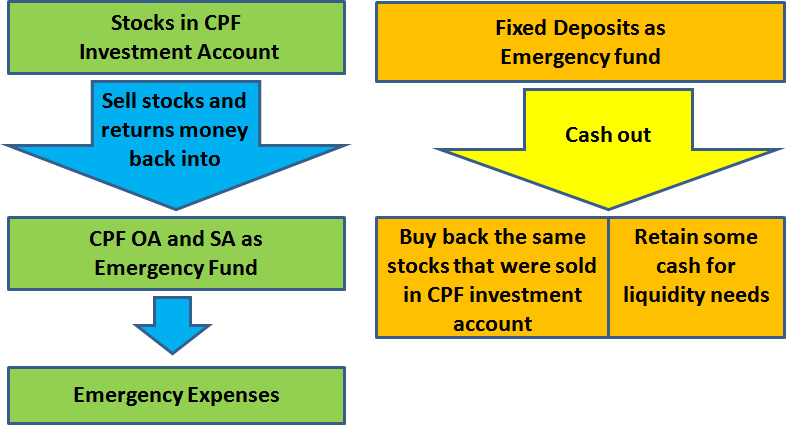
CPF Investment Account

Do you have some long-term stocks in your CPF investment account receiving good dividends?

If yes, don't close your CPF investment account to transfer them to CDP as cash stocks.

You can do something wonderful with those stocks in your CPF investment account.


Emergency Fund

Do you maintain several bank Fixed Deposits at low interest rate of 1.X% as Emergency fund?

If yes, now you have special privilege to transfer your fixed deposits from your banks to the National Bank of Singapore to earn much higher interest rate at 2.5% for senior citizens.

This is how you do it?

Keep most of your Emergency fund at the National Bank of Singapore to earn higher interest rate at 2.5%; but do maintain some spare money at low interest rate as liquidity fund at any bank in Singapore for immediate cash withdrawal. This is a small price to pay for liquidity and worth it.


I am senior citizen and
 a privilege banking customer of
National Bank of Singapore.


Saturday, 1 October 2011

Global Stock Markets Suffer Worst Quarter Since 2008

BLOOMBERG

Daniel Tilles and Shiyin Chen, On Friday September 30, 2011, 2:16 pm EDT


Stocks fell, dragging the MSCI All- Country World Index to its biggest quarterly loss since 2008, while the U.S. dollar strengthened as declines in Chinese manufacturing and German retail sales signaled global growth is slowing. Treasuries rose, and oil declined.

The MSCI All-Country World Index slid 1.6 percent at 2:13 p.m. New York time, extending its decline since June 30 to 17 percent. The Standard & Poor’s 500 Index slumped 1.3 percent. The Stoxx Europe 600 Index fell 1.2 percent. The dollar gained against 15 of 16 major peers, including a 1 percent advance versus the euro. Treasury 10-year notes snapped a five-day drop, extending their biggest quarterly advance since the depths of the financial crisis in 2008. Oil fell 1.6 percent.

Investing Made Simple by Uncle8888 (27)

Read? Investing Made Simple by Uncle8888 (26)


Setting Goals ~ Aristotle


First, have a definite, clear practical ideal; a goal, an objective.
Second, have the necessary means to achieve your ends; wisdom, money, materials, and methods.
Third, adjust all your means to that end!


Investing Goals for most young retail investors


Are you at or near the starting point in your investing journey as Uncle8888 who was 30 years ago and who was also keen to get married and setting up home for his family with kids.

That above graphic is no ordinary graphic for you look at and forget. It is graphic of wisdom in investing for most of us i.e. getting married and setting up family with kids. It has guided Uncle8888 well in his investing journey so it may also guide you in your own investing journey.

First Goal - Your First Home???

When it comes to debating on pros and cons of paying up housing loan (your first home for living) as soon as possible, it will be endless. It is like cat and dog debating on swimming and although some cats can swim.

Read these quotes:

"debt-free and that, to me, is richness enough" - Tabitha Wang

"A man is not a man; until there is a house that he may call his castle. A woman is not a woman; until she has a place she may call her home. And neither a man nor a woman can say anything about their house, until they are the masters of it, and own it outright and unencumbered." - Albert Yang.

Read more? Paying up your housing loan

It is best for you and yourself to seek your own wisdom to determine is your first home is truly your first goal.

Second Goal - Your Kids University Fund

Although your kids can borrow from banks; but as investors we should be able to meet this second investing goal; otherwise can we still consider ourselves as savvy and successful investors?

Final Goal - Retirement Income

We will need to build a robust portfolio for retirement that can fight against inflation and provide a sustainable and minimum retirement income stream during bear markets that will happen in between every few years. We want to avoid liquidating our investment during market low and locking in negative returns and making portfolio recovery harder at the next bull market.

How to build such portfolio for retirement needs?

May be ideas for future posts?

The best Bond fund in Singapore for senior citizens!

Read? The next 10 years (2012 - 2021) Investing Goals


Reaching 55. Congratulations! You are now senior citizen in Singapore.

You have the best Bond fund in Singapore for senior citizens of age 55 and above in the current bonds market condition. It pays yearly coupon rate of 2.5% per annum for CPF OA (aka Bond1) and 4% per annum for CPF SA (aka Bond2). These are the best coupon rate that you ever find in Singapore bond funds under current market condition. Unlike other bonds, these CPF Bonds do not have the typical re-investment coupon yield risk. It is automatically compounded at 2.5% and 4% respectively for Bond 1 and Bond2 if you don't wish to en cash the coupon payouts. Best of all, no maturity date and any time any target. But, only senior citizens of age 55 and above have this privilege.


Read? Work Less and Gone Fishing Planning Room (7)

The next 10 years (2012 - 2021) Investing Goals


Setting Goals ~ Aristotle

  • First, have a definite, clear practical ideal; a goal, an objective.
  • Second, have the necessary means to achieve your ends; wisdom, money, materials, and methods.
  • Third, adjust all your means to that end!

Past Investing Goals (2003-2011)

In this long investing journey, I have successfully completed the Growth path; and by conventional wisdom of investing during retirement phase I should be taking the Income path for the next 10 years investing goals.

Next 10 years (2012 - 2021) investing goals


The current Investing/Trading strategy that takes me along this investing journey from 2003 - 2011 is as below:

But, I realize that there is some weakness in current investing/trading in meeting yearly investing goal. The short-term trading performance will tend to have significant impact on the investing goal. It can either lead to under or over-performing the yearly investing goal and also depends too much on trading profit and losses.

Reserve Capital from CPF OA

Now that I have unlocked the reserve capital from CPF OA for investing. I will have to think of new investing/trading strategy for the next 10 years investing goals and conventional wisdom is to take the Income path.

Strategy A - Change to Income investing and do some fun trading

Dumping most of the reserve capital into fixed capital and also re-diverting most of the current re-cycling capital into fixed capital to stay invested in the stock market for dividends; but retains some re-cycling capital for fun trading. 

This is passive income investing approach. Frankly speaking, I feel that there is nothing to shout about this strategy as there is no shortage of good dividend yielding stocks to pick. Dividend investing will require intensive fixed capital to stay invested in the stock market to receive those dividends so account size really matters. It is relatively easier for investors who have large capital to execute it well to meet their investing goals.

I will just need to pump in enough fixed capital to roughly receive the anticipated amount of dividends to meet the investing goal. If the anticipated dividends fall short, I will then pump in the rest of the reserve capital into fixed capital to make it works.

Strategy B - Change to Income investing, fun trading and fighting the next Bear


It is quite similar to Strategy A, but this one will require lots of patience to see cash rotting in the bank while waiting for the next Bear to come. But, will he come?

In Strategy B, it may limit my capability of pumping in more reserve capital into fixed capital to get enough dividends so there will be risk of not meeting the yearly investing goal.

Strategy C - Continue with current strategy with added capital


Allocating the reserve capital into fixed and re-cycling capital will greatly improve the chance of meeting yearly investing goal and even high chance of over-performing it.

Strategy D - Continue with current strategy but aiming to build more wealth in the next Bear 
  
Pumping in part of reserve capital into fixed capital to raise the level of passive income will improve the chance of meeting the yearly investing goal while waiting for the next Bear to strike to grow wealth.

Conclusion

A, B, C or D?

I still have few more months to think over it. Anyone? A,B,C, D?


Related Posts with Thumbnails