I started serious Investing Journey in Jan 2000 to create wealth through long-term investing and short-term trading; but as from April 2013 my Journey in Investing has changed to create Retirement Income for Life till 85 years old in 2041 for two persons over market cycles of Bull and Bear.

Since 2017 after retiring from full-time job as employee; I am moving towards Investing Nirvana - Freehold Investment Income for Life investing strategy where 100% of investment income from portfolio investment is cashed out to support household expenses i.e. not a single cent of re-investing!

It is 57% (2017 to Aug 2022) to the Land of Investing Nirvana - Freehold Income for Life!


Click to email CW8888 or Email ID : jacobng1@gmail.com


Welcome to Ministry of Wealth!

This blog is authored by an old multi-bagger blue chips stock picker uncle from HDB heartland!

"The market is not your mother. It consists of tough men and women who look for ways to take money away from you instead of pouring milk into your mouth." - Dr. Alexander Elder

"For the things we have to learn before we can do them, we learn by doing them." - Aristotle

It is here where I share with you how I did it! FREE Education in stock market wisdom.

Think Investing as Tug of War - Read more? Click and scroll down


Important Notice and Attention: If you are looking for such ideas; here is the wrong blog to visit.

Value Investing
Dividend/Income Investing
Technical Analysis and Charting
Stock Tips

Monday, 13 September 2010

Olam - Sold $2.89, ROC 15.8%

Last sold Olam in 13 Oct 09 @ $2.65. Bought back in 6 Nov 09 @ $2.48 and waited till neck long long to sell today.
Stuffing more feathers for a bigger pillow!

Round 7: ROC 15.8%, 311 days, B $2.48 S $2.89


Round 6: ROC 10.2%, 8 days, B $2.39 S $2.65
Round 5: ROC 6.3%, 3 days, B $2.45 S $2.62 (Bought back higher)
Round 4: ROC 5.9%, 15 days, B $2.26 S $2.41
Round 3: ROC 9.6%, 8 days, B $2.18 S $2.40
Round 2: ROC 7.0%, 8 days, B $2.18 S $2.35 (Bought back higher)
Round 1: ROC 9.8%, 161 days, B $1.37 S $1.52

Sunday, 12 September 2010

Doomsday warnings of US economic apocalypse gain ground

WASHINGTON - Economists peddling dire warnings that the world's number one economy is on the brink of collapse, amid high rates of unemployment and a spiralling public deficit, are flourishing here.


The guru of this doomsday line of thinking may be economist Nouriel Roubini, thrust into the forefront after predicting the chaos wrought by the sub-prime mortgage crisis and the collapse of the housing bubble.

"The US has run out of bullets," Roubini told an economic forum in Italy earlier this month. "Any shock at this point can tip you back into recession."

But other economists, who have so far stayed out of the media limelight, are also proselytizing nightmarish visions of the future.

Boston University professor Laurence Kotlikoff, who warned as far back as the 1980s of the dangers of a public deficit, lent credence to such dark predictions in an International Monetary Fund publication last week.

He unveiled a doomsday scenario -- which many dismiss as pure fantasy -- of an economic clash between superpowers the United States and China, which holds more than 843 billion dollars of US Treasury bonds.

"A minor trade dispute between the United States and China could make some people think that other people are going to sell US treasury bonds," he wrote in the IMF's Finance & Development review.

"That belief, coupled with major concern about inflation, could lead to a sell-off of government bonds that causes the public to withdraw their bank deposits and buy durable goods."

Kotlikoff warned such a move would spark a run on banks and money market funds as well as insurance companies as policy holders cash in their surrender values.

"In a short period of time, the Federal Reserve would have to print trillions of dollars to cover its explicit and implicit guarantees. All that new money could produce strong inflation, perhaps hyperinflation," he said.

"There are other less apocalyptic, perhaps more plausible, but still quite unpleasant, scenarios that could result from multiple equilibria."

According to a poll by the StrategyOne Institute published Friday, some 65 percent of Americans believe there will be a new recession.

And the view that America is on a decline seems rather well ingrained in many people's minds supported by 65 percent of people questioned in a Wall Street Journal/NBC poll published last week.

"It is true: Today's economic problems are structural, not cyclical," argued New York Times editorial writer David Brooks.

He said the United Sates is losing its world dominance much in the same way the British Empire began to crumble more than a century ago.

"We are in the middle of yet another jobless recovery. Wages have been lagging for decades. Our labor market woes are deep and intractable," Brooks said.

Nobel Economics Prize winner Paul Krugman also voiced concern about the fate of the fragile economic recovery if voters return the Republicans to political power.

"It's hard to overstate how destructive the economic ideas offered earlier this week by John Boehner, the House minority leader, would be if put into practice," he wrote in a recent editorial.

"Fewer jobs and bigger deficits -- the perfect combination."

The Wall Street Journal, usually more favourable to Boehner's call for tax cuts, ran a commentary from another Nobel Prize-winning economist -- Vernon Smith -- that failed to provide much comfort for readers.

"This fact needs to be confronted: We are almost surely in for a long slog," Smith wrote.

And it seems such pessimism has even filtered into the IMF, which warned on Friday that high levels of national debt and a still shaky financial sector threaten to derail the global economic recovery.

"The foreclosure backlog in US property markets is large and growing, in part due to the recent expiration of the home buyer's tax credit. When realized, this could further depress real estate prices."

This could lead to "disproportionate losses" for small and medium-sized banks, which could in turn "precipitate a loss of market confidence in the recovery," the IMF warned.

- AFP/ir

Saturday, 11 September 2010

Right issue back again (2)

Read older post? Right issue back again

The best way for companies to expand is through their own internal resources and/or increasing their debts to a level without worrying their lenders or bankers. But, when companies can't expand through their own internal resources or raising more debts, they will have no choice but either do private placement or discounted right issues.

Private share placement is obviously suck for existing shareholders and there is no need to debate on it.

But discounted right issues are not so straight forward but may be just fooling existing shareholders to put up more cash to prevent being diluted i.e. higher investment cost to hold more or less the same percentage point in the enlarged base after the right issues.

At the point of right issues, there is no gurantee despites the discount being offered in the rights issue that the company will meet its growth targets or get substantial returns from their increased investments as communicated. If company failed to meet the planned growth target, then EPS could get hit much harder due to the effect of unexpected future reduced profits and higher equity base. One must take serious note that the higher equity base will always be there regardless of its future earning.

Are new HDB prices really not affordable now?

When I bought my 4-room HDB at $55K; I was earning around $9K on that year so this was about 6.1 times my annual salary.

I understand that a new 4-room at Punggol now is selling at about $300K; but these flats built now are of better design and quality. Mine was a standard rectangular block of flats.

I understand people now earn more.
Let assume someone earning:
  • $48K a year, it is 6.3 times annual salary
  • $36K a year, it is 8.4 times annual salary
I think the problem is on HDB Re-sale flats that are priced too high due to investment gains that are expected by the current owners to give up their prize flats.

REITs. Simply explained! (5)

Read older posting? REITs. Simply explained! (4)

Read posting by lioninvestor? Are Singapore REITs a Good Investment?/

"For those existing investors who could raise the capital to subscribe for their rights, they are returning most (if not all or more) of the dividends they had collected back to the REIT. Don’t let the discounted price fool you as you are essentially paying just to maintain your percentage shareholding in the REIT." - lioninvestor

I can't agree more with the truth on "the discounted price fooling you" as I recently overheard some joys near the Temple of Cows over AIMS AMP Capital Industrial REIT's right issues - discounted price fooling again?

Try to understand Mdm. Ho Ching's speech on S-REITs?

Another Debate On Property Or Stocks Investing - Part 7

Read? Another Debate On Property Or Stocks Investing - Part 6

Someone commented: "No statistics, but most people who aren't millionaires and are not good at investing will have a better chance at becoming a millionaire from property investing than stock investing."

Inherent Emotionally Positive Feeling

  1. Rarely, will retail property investors shake their heads on "losses" on their property investment as most of them will strongly believe that in the long run property prices in Singapore have only one way to go - UP!
  2. The property will be MINE when one day it is fully paid either through rentals or mortgages or both.
  3. Rarely, will retail property investors check their valuation of their properties at such high frequency e.g on daily or weekly basis. 
So there exists this inherent emotionally positive feeling in investing in properties. It is good for those can't ride the emotional roller-coaster stock market to save up and invest in property and avoid being emotionally trapped in the stock market.

Friday, 10 September 2010

Money Mind and mindset (Re-visit)

Read older post? Revisit what I have posted in Sunday, 5 August 2007

Read? Money Mind and mindset

Read? Work for money? Forget it

Fisherman's Mind


I feel that who don't have strong belief in using compounding returns in the stock market to build up their wealth towards financial independence tend to love controls over the things they do. After a long period of time, if they don't have that strong feeling of control, they will tend to be uncomfortable.

Before you hit the Buy button in your broker's trading platform, you have absolute control over it; but once you have bought the stock, you have completely gave up that control to the market. The market will then decide the fate of your stock.

Similarly, like fishing!

Before you throw that fishing line into sea you have full control over it. But, once the fishing line is in the sea, you have absolutely lost control over it. The sea with its under-water current, tides, obstacles and fishes will decide your fishing fate. You may caught a fish or lose your bait or lose your sinker, and the worst thing to happen is that a big fish may come and break your fishing rod or line and make you feel like ...

May be it is a good idea that before you learn to invest in the stock market, take up fishing!


You will learn to build up your patience and realize that the sea and its fishes that has control but not you!

Thursday, 9 September 2010

Simple but not easy!

Read? Entry And Exit That Matters!

Since Nov 08 I only use Support and Resistance for entries and exits and no other technical indicators.

I also believe any Tom, Dick, and Harry who are in the market for a while will know how to draw a support and resistance line. It is simple but is it easy to use? I don't know.

How many people will just use support and resistance and still believe they can make money out of it?

Revisit what I have posted in Sunday, 5 August 2007

Read ? Investing article in Sunday Times Aug 5 2007 ME & MY MONEY

That was three years ago that I have posted this article and the past few days of reading some comments related to active income from jobs and money from stock investing has helped me to recall it.

There are three ways to build wealth.

  1. Most people will work to build wealth; but if you doesn’t have a high-paying job, you can work till cows come home and may just making ends meet. (Createwealth8888: How many people can really make it to high-paying job, Just how many VP, EVP, CEO are there?? BIG RAT race!)
  2. The next group of people will start their own business. Some may make it big and others may fail badly. (Createwealth8888: Many of us are not in this group, many of us will dream of it and talk about it. But, if you don't dare to take some money to invest, don't ever think or dream to be in this group. FAT HOPE!)
  3. The third group will make money work for them through investments. They may have decent-paying jobs and invest to make their money work harder for them. (Createwealth8888: Only those with passion in investing, constantly learning from it, control the emotion of GREED and FEAR; and STRONGLY BELIEVE IT THAT IT CAN BE DONE, AND HAVE A PLAN, AND A ULTIMATE GOAL will make it, perhaps it is less than 20-30% in this group will make it, and many will fail, and bang their hearts)
Know when to be aggressive and when to be conservative. Know yourself, your level of greed and fear. (Createwealth8888: To be aggressive, you need to follow the stock history and company fundamental very closely, and strike at the right time by using pyramiding the investment method, you will win BIG if direction moves in your favor)

Get Real! Expected returns from the stocks?

"In business, words are words; explanations are explanations, promises are promises, but only performance is reality." - Harold S. Geneen


Here are some the world's top investment guru's annualized returns:

Peter Lynch, he posted a 29.2% average annual return over 13 years

Warren Buffett, from 1965-2005,over 40 years has produced an annual average return of 21.5%

Anthony Bolton, his Special Situations the fund achieved an average annual return of 19.5% over 28 years

Bill Miller, Portfolio Manager of Legg Mason Value Trust (LMVTX). Since inception, his fund has earned 15.25% average annual total returns over 15 years

Considering time and returns, I would rank in this order

Warren Buffet - 21.5%

Anthony Bolton - 19.5%

Peter Lych - 29.2%

Bill Miller - 15.25%

I think if we can achieve annualized returns over 10-12%, we can congratulate ourselves to be successful in managing our returns on investment.

Read? Do you have one minute to update your portfolio?

Wednesday, 8 September 2010

Long-term investing is a Marathon Race! (2)

Read? Long-term investing is a Marathon Race!

For those who are thinking of supplementing your earned income from the stock market and believing that it can be easily done. Yes, investing in stock market is fairly simple but never easy. Simple is not Easy. Simple may also mean losing money is Easy.


"Do or Do not. There is no try"


Master Yoda's wise words are very true in investing in the stock market.

Tuesday, 7 September 2010

Biosensors International BIG SP

By Nomura Singapore Limited

COMPANY QUICK COMMENT


According to Bloomberg, Microport Scientific, the leader in the Chinese drug-eluting stent market, is raising about US$150mn via a Hong Kong IPO this month (Bloomberg, 1 Sep 2010). If Weigao's current valuation of 35x FY11 P/E is any guide for Microport's, we believe a successful IPO by Microport could be a re-rating catalyst for Biosensors, which owns 50% of JWMS - the last remaining private stent maker in China with a significant market share. Reiterate BUY -- we'll provide further industry analysis on Microport's prospectus pending its release.
 
Peer listing to drive rerating?


Market leader with first mover's advantage. Microport is the market leader in drug-eluting stents (DES) in China with a c30% market share (vs. 20~25% for Lepu and JWMS). Its DES Firebird was the first local DES to be launched in China (in May 2004). While we believe its technology is not groundbreaking (sirolimus-eluting stent similar to Johnson & Johnson's Cypher), Firebird has maintained its market-leading status over the years due to its first mover advantage, albeit with a declining market share. It has recently launched a clinical trial for a next-generation DES FIREHAWK which has a biodegradable polymer. (for more details, see our initiation report Moving past the inflexion point, 16 Oct 2009)

Re-rating of Biosensors? One part of the investor feedback we have received on BIG is the lack of a trading comparable (ie, a single-product cardiovascular device company listed in Asia, excluding A-shares). Therefore we believe Microport's H-shares listing augers well for BIG as investors potentially become more knowledgeable on the industry. If Weigao's current valuation of 35x FY11F P/E is any guide for Microport's listing, we believe a successful IPO by Microport could be a re-rating catalyst for Biosensors, which owns 50% of JWMS. Our PT of $1.20 values JWMS at 22x FY10F P/E.

Investing After the Crash

By: Tom Brennan
Web Editor, Mad Money

The line between trading and investing may have blurred, Cramer said Friday, especially after the crash of 2008.

He used to define investing as a long-term buying strategy, one where a stock was bought with an 18-month time horizon in mind. Trading, on the other hand, was a near-term approach used to capitalize on market fluctuations. But now Cramer is recommending some combination of both, because those short-term price moves could be the best way to recoup your losses from the crash and get back to even.

“I think we all need some trader in our DNA,” Cramer said.

Of course, plenty of financial advisers would rail against this. They still believe in “buy and hold,” the idea that the gains earned over the long term will compensate for any short-term losses. But after the credit crisis and the Dow’s near 5,000-point plunge that followed, Cramer decided the short-term fluctuations just can’t be ignored.

Price matters. Caterpillar [CAT 70.08 1.54 (+2.25%) ] may look attractive at $30 but not at $55. Google [GOOG 470.30 7.12 (+1.54%) ] could be buyable at $600 but not at $700. That’s because the risk profile changes as the price does. Certain stocks deserve to be sold when they soar too high, while others should be bought when they dip too low. And if you got CAT and GOOG at those lower prices, then certainly you’d want to lock in the gains and buy them back on a decline.

Cramer likened it to shopping at, say, Macy’s [M 20.87 0.16 (+0.77%) ]. You see a sweater you like for just $30, so you buy it. But you wouldn’t consider the purchase at all if the sweater was going for $55. Well, the market is like “Macy’s on steroids,” he said. Stocks are marked up and put on sale with alarming frequency, and investors watch these moves in order to get the desired merchandise at the best price possible.

Now, Cramer wasn’t trying to turn his viewers into day traders. But he firmly believes that any loss that can be avoided should be avoided, and you should buy good stocks when they go on sale. If fact, it couldn’t hurt to have a shopping list of companies you’ll snatch up when the price is right. And the same goes for selling. When a stock on the list has moved high enough, then take profits.

Cramer called this “the basis of intelligent long-term investing.”

Monday, 6 September 2010

Preserving or building wealth? That is the difference! (2)

Read older post? Preserving or building wealth? That is the difference!

Does preserving wealth mean money doesn't grow anymore?

Obviously not! Money can still grow if the returns far exceeds inflation. This may be a good strategy if one doesn't have an aggressive investment goal to meet.

Read? The Best Secret in Investment and Trading – Compound Interest


How much investing capital or portfolio you have now and how far away from your goal posts will determine your rate of compounding required on your investment for you to reach there?
It is just simple Maths!

For example, from the current investing capital of $200K to $600K in 15 years for future kids university fund. It will require to compound the initial capital of $200K at 7.6% for 15 years probably over several bulls and bears market cycle.


Sunday, 5 September 2010

Anti-speculation measures for the property market

Will the anti-speculation measures for the property market introduced by the govt now lead those property speculators back to the stock market and add liquidity to the stock market? The more the merrier.

Gift of Hand Bouquets, Flowers and Hampers

Simply without the high rental overheads, we can pass the costs saving back to you by offering a varied selection of Corsages, Boutonniere, Gift of Flowers, Hampers, Hand Bouquets, Baby Showers at your own budget.

To place an order, you can email CreateWealth8888 and state the code number of the desired product below the photo.

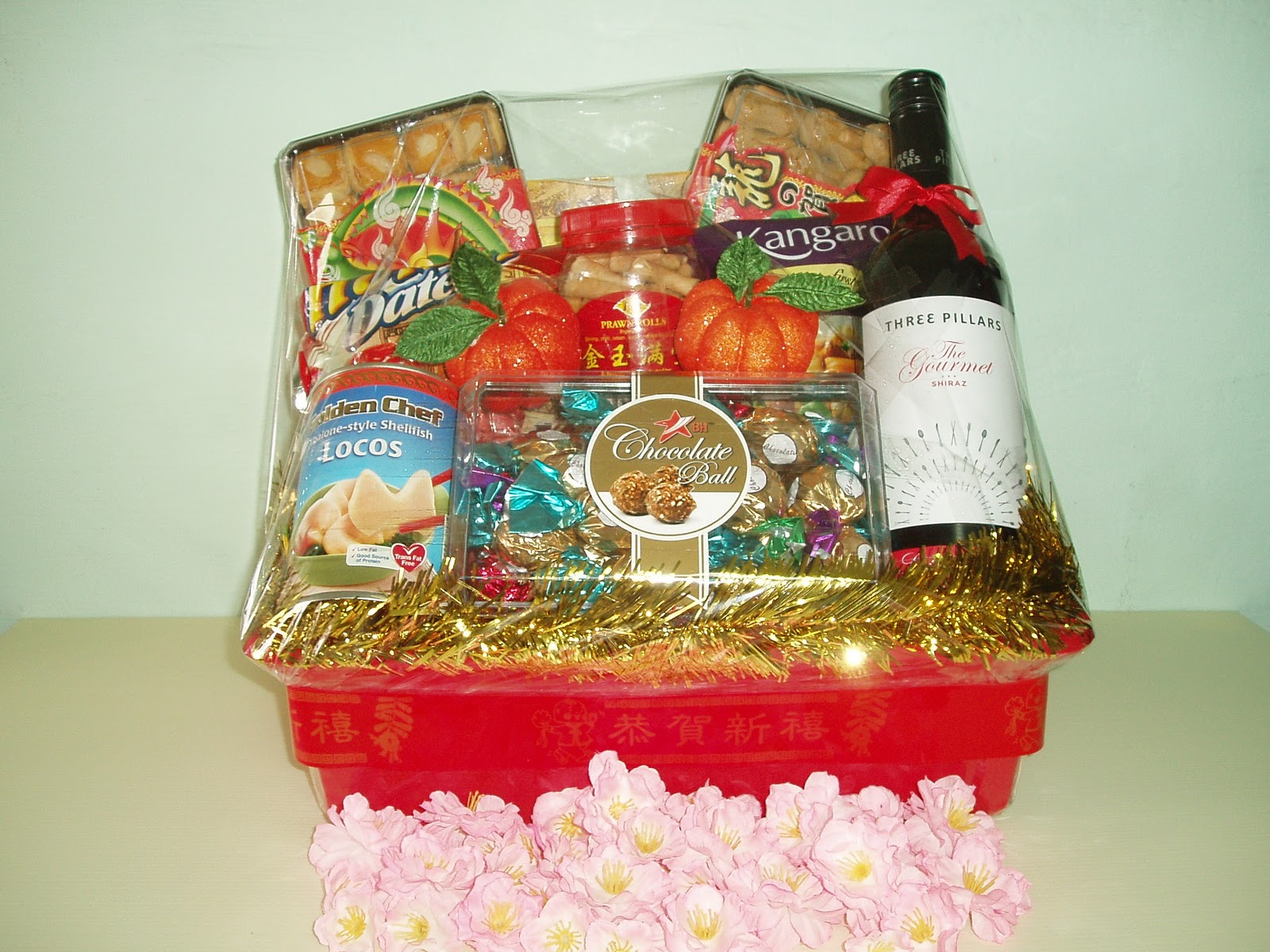
2013 Chinese New Year Hampers


CNY Hamper CH 1: SGD $108


Items List for CH 1:

1. Three Pillars (Shiraz, 2010), South Australia, Red wine, 750 ml
2. Golden Chef, Abalone - style shellfish, Locos, 425 g
3. BH Chocolate Ball. 313 g
4. Li's Prawn Rolls. 220 g
5. Style Food Coffee Nut Cookies. 280 g
6. style Food Japanese Almond. 320 g
7. Bamboo House Pineapple Cake. 250 g
8. Kangaroo Mixed Nuts. 250 g
9. Ego Honey Dates. 200 g


CNY Hamper CH 2: SGD $128
Items List for CH 2:

1. Alice White (Australia), 750 ml
2. Golden Chef, NZ, Superior Abalone, 425g
3. Golden Chef, Pacific Clams, 425g
4. Ferrero Rocher, 300g
5. Kai Yue Snow Jelly Plum, 800g
6. Gangnong Fruitfull, 225g
7. Pineapple Tarts, Sing Long, 180g
8. Wang Lye Prawn Roll, 200g
9. Coffee Nut Cookies, Style Food, 300-400g
10. Camel Mixed Nuts with Cashews, 350g
11. Koh-Kae, Grren Peas (Wasabi) 180g


Baby Hampers


                                   BH 1 - S$60


                BH 2 - S$50                                        BH 3 - S$50


                          BH 4 -  S$50


  BH 5 -  Items are specified by customer


Gift Hamper


                     FH 1 - S$80


Hand Bouquets

(Price quoted is not applicable during Valentine Day)


       F1-S$40                             F2-S$35                                F3-S$35


F4-S$60                     F5-S$20                        F6-S$40
                 

F7-S$50


F8 - $80


F9 S$35


F10: S$12


F11: S$35


 F12: S$40


My top 3 Highest viewed articles

The top 3 highest viewed articles are as follows:

No 1: High Dividend Yield Stocks? - Part 8

No 2: Help me! I am still losing money in my Investment Quadrant - Part 1 (Newer post: Help me! I am still losing money in my Investment Quadrant - Part 4

No 3: Understanding Stock Market Risks - Updated

I am not surprised at the topics of the top 3 highest viewed articles as it indicates that many readers are surfing the Net for articles related to high dividend yield, not losing money in stock markets and understanding risks in the market. Probably, these are what most investors are thinking in their minds.

Saturday, 4 September 2010

One guy called Alvis and his multi-bagger blue chip Genting!

"To succeed as investor, one has to look at stocks on the longer-term horizon and search for multi-baggers." - Dr Michael Leong


Where can we find the next multi-bagger blue chip?

Preserving or building wealth? That is the difference!

Read old posting on? REITs. Simply explained! (3)

Read old posting on? What is Long-Term Investing?

"If you are near the Temple of Cows and keep hearing a bunch of cowboys chanting the Sutra of Milk, soon you will become religious." - Createwealth8888


Understand your own investing goals and know where you are now?

In our investing journey, there will be two distinct investing paths - Growth and Income.
 
The Growth path is for us to build up wealth and the Income path is for us to preserve wealth so it is very important for us to know where we are now and choose the right strategy to meet the investing goals.
 
For retail investors, our age can be our friend or our foe. When we are nearer to 50s or 60s and realize that we are not nearer to the last investing goal post then it is already too late to do anything. 
 
The growth path can be tough and full of risks as it can even make or break you. Most of us may have little choice but to travel this difficult path to build up our wealth using the magic of compounding and to find the potential multi-baggers. A few multi-baggers in your portfolio could just mean that your future kids University education fund may be already secured if you choose to liquidate it and move the money to risk-free Fixed Deposits.
 
However, there will be some retail investors who are born lucky as they may have Bank of Papa or Bank of Mama behind them to support or provide them so they may just need to travel a shorter growth path or not at all. Travelling on the income path is of course much easier as the market is never short of low hanging high yield income bearing stocks.
 
"Rich or rich-and-old cowboys can sip Milk, sing song and tell Cocks and Bulls stories; but young and poor cowboys are better off hunting for more wild bulls and cows as you are not there yet." - Createwealth8888


Friday, 3 September 2010

US unemployment jumps to 9.6%

WASHINGTON : US unemployment jumped to 9.6 per cent in August, the Labor Department said on Friday, showing the recovering economy is still struggling to create jobs.


In a keenly awaited unemployment report, the department said the economy lost 54,000 jobs last month, a better figure than the 120,000 loss expected by economists.

The figures are seen as a crucial litmus test for the sputtering economic recovery and President Barack Obama's policies.

Economists had predicted the unemployment rate would rise to 9.6 per cent, one tenth of a percentage point above July levels, although much better than the 10.1 per cent posted in October.

The news was seen by Wall Street as moderately good news, but will throw up challenges for the White House and the Federal Reserve as they struggle to help the jobs market to its feet.

The White House has ruled out an "extraordinary" new economic stimulus plan to fire up the slowing recovery, but has said that Obama is scouting new ideas to boost jobs and growth.

Obama is expected to address the latest jobs figures later in the day, as he begins a heavy slate of economy-themed events, including travel to the hard-hit Midwest to highlight his economic recovery plans and the hosting of a major press conference next Friday.

But with many lawmakers fretting ahead of November's mid-term elections and public concern mounting over the forecast 1.4-trillion-dollar budget deficit, Obama's leeway is limited.

One bright spot in the August jobs report was the private sector's ability to create a much better than expected 67,000 jobs, although that was not enough to offset the government releasing around 114,00 temporary census workers. - AFP/al/ms

Thursday, 2 September 2010

Sembcorp to explore water projects in Shenyang, China

By ANGELA TAN

Sembcorp said on Thursday that its subsidiary, Sembcorp Utilities, has entered into two framework agreements to explore the expansion of its presence in Shenyang.

The first of the framework agreements signed was with the Shenbei New District municipal government to explore the provision of water supply, wastewater treatment services, steam supply and district heating services to industrial and municipal customers in Shenbei district.

The second was with Shenyang Water Group Co. (SWGC) to explore a possible joint venture to operate and manage SWGC's water assets serving mainly municipal customers in Shenyang.

The signings, which took place on the sidelines of the 5th Singapore-Liaoning Economic & Trade Council Meeting held from August 30 to September 2, 2010 in Liaoning, China,

September by the Numbers

by Mark Hulbert

Wednesday, September 1, 2010

Commentary: Little statistical hope that stocks will beat month's bad reputation

I have good news and bad news when it comes to slicing and dicing the historical data as it pertains to September.

The good news is that it is possible, by carefully reading the statistical tea leaves, to get advance insight into whether any given month is likely to do better or worse than average.

The bad news: Those tea leaves provide no such hope that this September will be able to beat its historical reputation as being awful for stocks.

The Historical Record

Let me begin by reviewing the dreadful details of September's record. Since 1896, when the Dow Jones Industrial Average was created, the Dow has lost an average of 1.15% in September. The average gain for all other months is 0.71%. That spread of 1.86 percentage points is statistically significant at the 95% confidence level that statisticians often use to determine if a pattern is most likely genuine.

Furthermore, there has been a remarkable consistency to the stock market's dismal performance during September. During each of the past nine decades, for example, September's rank relative to other months in terms of performance was never higher than ninth. It was dead last in five of those nine decades -- including the most recent one.

To be sure, September's terrible reputation is widely known, and patterns often stop working once too many investors begin trying to exploit them. But the pattern has been widely known for many years already, and shows no signs of weakening.

For example, it was more than 20 years ago that (as far as I can tell) the first academic study appeared in which September's significantly-below-average return was noted. Since that study was completed, the spread between September's average return and that of all other months has been even wider than it was up until that point.

Beating the Odds

This terrible record notwithstanding, however, hope could still have been held out for September -- provided other statistical patterns had fallen in place. Unfortunately, those other patterns have failed to do so.

The strongest of those other patterns has to do with how stocks have performed in the months leading up to September. The market exhibits momentum, and September tends to at least somewhat beat the historical odds if the market is riding a strong wave of momentum going into the month.

Over the past 110 years, for example, September has produced an average loss of 2.7% whenever the stock market lost ground during August and was in the red for the first eight months of the year. It lost "just" 0.6%, in contrast, following stock-market gains during August and over the year-to-date period.

Unfortunately for this September, however, this momentum factor is working against the stock market. The Dow enters the month having not only lost ground during August, but as of Aug. 31 is also sporting a loss for the year-to-date.

Another pattern that has had some modest success in forecasting stock-market returns is the level of the CBOE's Volatility Index as of the end of the previous month. Despite the VIX's reputation as a contrarian indicator, my analysis shows that September tends to be a better month for stocks whenever the VIX is relatively low going into the month.

For example, since 1990, when the volatility index was created, September has lost an average of 2.8% whenever the VIX was above 20 at the end of August. In contrast, the stock market on average was flat during September whenever the VIX at the end of the previous month was below 20.

Once again, however, this pattern holds out little hope for this coming September in particular: The VIX as of the end of August stood well above this 20 threshold.

The bottom line? The stock market is not guaranteed to fall during September, of course. But, if you want to nevertheless bet on stocks rising over the next month, you will have to base it on something other than how the stock market has performed in prior Septembers.

Wednesday, 1 September 2010

Before you plan to retire, plan to get out of office rat race first!

Read older post? Retire early, live longer?

Today, there are two letters in the  ST's forum page, A33 related to topic of retirement.

I believe that before one starts thinking of retiring, one should plan to "retire" from office rat race first, e.g. semi or quasi retirement (working just enough not to get sacked). But, to be able to do that one needs to have other sources of income generating capabilities to compensate it as you may be unexpectedly get fired!

So, if one mainly depends on active income from your salary to build up wealth; then it may difficult to get out from office rat race.

Tuesday, 31 August 2010

S'pore banks are top three safest banks in Asia: Global Finance magazine

SINGAPORE : Singapore banks are the top three safest banks in Asia, according to the Global Finance magazine in its October 2010 issue.


DBS Bank clinched the top spot for the second year. OCBC took the second while UOB ranked third.

Globally, DBS Bank was ranked the 23rd safest bank, up one notch from 24th place last year.

OCBC was 31st while UOB was 32nd.

Global Finance said the banks were selected through a comparison of their long-term credit ratings and total assets of the 500 largest banks around the world.

It used ratings from Moody's, Standard & Poor's and Fitch.

Global Finance publisher Joseph D Giarraputo said banks that have strengthened their liquidity positions and the quality and quantity of their capital are recognised in these rankings.

He added that more than ever, customers around the world are viewing long-term creditworthiness as the key feature of the banks with which they do business.

This is on the back of the sovereign debt crisis in Europe and renewed concerns about the global economic outlook, which once again put the spotlight on bank safety. - CNA/ms

Another Debate On Property Or Stocks Investing - Part 6

Read older post on? Another Debate On Property Or Stocks Investing - Part 5

Read older post on? Investing in Property is far safer than stocks?

"It is much harder to find multi-baggers in properties as the Government is always watching closely and likely to introduce cooling measures to clamp down property prices from rising too fast." - Createwealth8888


Govt introduces new measures to cool S'pore property market


By Joanne Chan
Posted: 30 August 2010 0824 hrs

SINGAPORE: The government on Monday introduced more measures to cool the buoyant property market.

These include raising the holding period for which a home seller must pay a stamp duty and reducing the maximum bank loan amount for existing home owners who want to buy another property.

The measures, which take immediate effect, came as a strong economy and low borrowing rates have continued to push property prices up, sparking concerns of a property bubble.

Private property prices shot up by some 11 per cent in the first half of this year and have now exceeded the previous peak in 1996.

National Development Minister Mah Bow Tan said prices are "on the high side".

He said: "If the current momentum in the market continues, what will likely happen is that a property bubble will form. And when the bubble burst, and not if, but when the bubble burst, there will be severe implications for individuals, as well as for the economy on the whole."

So the government has moved to curb speculation and also encourage financial prudence among buyers.

The holding period for the seller's stamp duty has been increased from one to three years to discourage home owners from flipping. The seller's stamp duty was first introduced in February this year.

Another measure will impact those who have one or more outstanding housing loan. Home buyers who already have at least one mortgage will have to pay more cash upfront when buying their next property.

The minimum cash payment has been doubled from five per cent to 10 per cent of the home's valuation, while the maximum bank loan amount has been reduced from 80 to 70 per cent.

The government said the objective of the measures is "to ensure a stable and sustainable property market where prices move in line with economic fundamentals".

The Housing and Development Board (HDB) has also introduced anti-speculative measures to its resale market. These include increasing the minimum occupation period for non-subsidised flats to 5 years.

Mr Mah stressed that HDB flats are meant for long-term occupation, and not for speculation. Home owners can no longer own both private property and an HDB flat at the same time during the minimum occupation period.

So those who buy a non-subsidised HDB flat must sell off their private property within six months. Similarly, home owners of non-subsidised HDB flats will not be allowed to own private property before the minimum occupation period is up.

These changes will only apply to those submitting flat applications from August 30 and will not be applied retrospectively.

Mr Mah also gave the assurance that there will be more help for first-time home buyers.

The HDB will raise the supply of flats. Up to 22,000 new Build-To-Order (BTO) flats will be made available next year.

Together with the 16,000 BTO flats released this year, HDB will be offering more new flats over the two years than all the flats in Toa Payoh town today.

In addition, the waiting time for a BTO flat will be reduced by six months to 2-1/2 years.

To help the sandwiched class, those earning between S$8,000 and S$10,000 will now be eligible for flats under the Design, Build and Sell Scheme (DBSS).

HDB will also release land for 4,000 DBSS flats and 4,000 Executive Condominiums next year.

It said new sites for DBSS projects in Bedok, Hougang and Jurong will be put up for tender later this year. Sites in Punggol, Pasir Ris, Bukit Panjang and Tampines will also be released for the development of executive condominiums

Monday, 30 August 2010

$100,000 above valuation - clever or crazy?

Read old posting on? Why Think Of Selling Dream Home?

Createwealth8888:

So is he crazy? I said no and I believe he could well afford it and knew how to live his life!


"Does everything in your life have a price tag and can be sold for a profit?" - Createwealth8888

----------------------------------------------

The Electric New Paper :


Despite friends' dissuasion, our journalist buys Choa Chu Kang HDB penthouse at whopping $755,000.

29 August 2010

Yes, I paid $100,000 in cash-over-valuation (COV) for my HDB flat. No, I did not mistakenly add an extra zero to that figure.

"Gila" (crazy in Malay), said one friend. Totally exorbitant, chided another.

But I have only one question: How much would you pay for the home of your dreams?

I felt it was worth paying $755,000 for the four-bedroom executive maisonette in Choa Chu Kang, even though I feel that property prices have hit ridiculously high levels.

The 12-year-old flat has 87 years left on its 99-year lease.

The Business Times reported last month that the median COV for executive flats and five-roomers in hot areas, such as Bishan, was $70,500 and $52,500 respectively.

Sure, the amount I paid was more than that. But it wasn't an impulse buy.

My wife and I considered many things before choosing this flat and finally signing on the dotted line.

So what happens when the property market cools and prices start dropping? Will I regret how much I have put into my new home?The answer is no.

I certainly don't plan to sell. Not even if someone dangles a $150,000 COV offer.

That's because I've found my dream home, where one day you'll find me relaxing in my roof garden, sipping a home-made teh tarik and watching the world go by from my 12th-floor perch.

By then, I hope I won't even remember how much of a hole I'd burnt in my pocket

Read more? Is Home For You to Retire Or to fund your Retirement?

New measures to cool property market

SINGAPORE: The government said Monday that it will increase the holding period for imposition of Seller's Stamp Duty (SSD).

The SSD will be raised from the current one year to three years.

Another measure will impact those who have more than one outstanding housing loan.

Property buyers who already have one or more outstanding housing loans at the time of the new housing purchase will have to pay more money upfront.

The government will increase the minimum cash payment from five per cent to 10 per cent of the valuation limit.

Those with more than one outstanding housing loan will also see a decrease in the Loan-to-Value (LTV) limit for housing loans granted by financial institutions regulated by MAS.

The LTV will be lowered from the current 80 per cent to 70 per cent.

The measures will take immediate effect on August 30.

The government said the objective of the measures is "to ensure a stable and sustainable property market where prices move in line with economic fundamentals".

It noted that the property market is currently very buoyant, with prices increasing by 11 per cent in the first half of this year.

It added that while Singapore has enjoyed strong economic growth in the first half, growth is expected to moderate in the second half of the year.

Should economic growth falter and the market correct, the government said property buyers could face capital losses.

It has thus decided to introduce additional measures now to temper sentiments and encourage greater financial prudence among property purchasers.

-CNA/wk

Sunday, 29 August 2010

What did I share with a guy called Noobz on our first meeting?


Potential Multi-bagger or Touchstone

Read on? Opportunity In The Stock Market?

How does a touchstone in a stock market feel like?

After you have bought that stock; its stock price never look back but raced ahead. Even after several market corrections, its stock price has never pull back to the level near your last purchase price. Then congratulate yourself as you may have found a Touchstone so don't ever throw it back to the sea out of habits. 

If you really need to realize some profit, then only sell part of it.

Did that guy called noobz still remember his takeaway? 

I don't know!


On the trail of the smart money

By Goh Eng Yeow


Timing an investment right is everything, a successful investor will tell you. (Createwealth888: Don't listen to those nuts who tell you that you can't really time the market and profit from it.)

You may want to play it safe by hedging your bets by sticking to buying only blue chips.

But if you make your purchases just as the stock market is experiencing a bull run, you may find yourself staring at a loss when the market corrects, even though there is nothing wrong with the blue chips that you bought.

That is the unhappy experience confronting many investors who believed - rightly or not - that they could not go wrong by parking their nest eggs in a cache of blue chips.

Some of them had bought into household names such as DBS Group Holdings, Singapore Airlines and United Overseas Bank (UOB) when the great bull run of 2007 was in full swing.

But even after the rebound in the past six months that saw share prices gaining by more than 80 per cent, these investors are still sitting on losses.

So a pertinent question to ask is whether timing an investment right is really so difficult.

Take the global stock market collapse in October last year. The Dow Jones Industrial Average plunged 14 per cent within a month, while Singapore's benchmark Straits Times Index (STI) lost 24 per cent.

The resulting loss in market confidence was so immense that many jittery investors bailed out of stocks altogether.

But around this time, legendary investor Warren Buffett took a contrarian view, and spent more than US$20 billion (S$28 billion) investing in United States corporate giants such as General Electric and Goldman Sachs.

He explained his rationale: 'Let me be clear on one point. I can't predict the short-term movements of the stock market. I haven't the faintest idea as to whether stocks will be higher or lower a month - or a year - from now. What is likely is that the market will move higher, perhaps substantially so, before either sentiment or economy turns up. So if you wait for the robins, spring will be over.'

His advice to investors: Be fearful when others are greedy, and be greedy when others are fearful.

Events in the past six months bore him out. He made a paper gain of US$2.8 billion on his Goldman Sachs investment alone.

Still, if you think that Mr Buffett is too tough an act to follow, there are local corporate titans worth tracking, like UOB chairman Wee Cho Yaw.

After keeping his powder dry in the past two years when share prices rose to record levels, Mr Wee sprang into action in March when the STI sank to a six-year low of 1,456 points.

While market gloom kept most investors on the sidelines, he picked up 800,000 UOB shares for between $8.25 and $9.01 apiece that month. Since then, UOB shares have doubled in price.

That same month, Mr Wee bought 680,000 shares in Haw Par Corporation for between $3.35 and $3.41 apiece. Its price has now almost doubled as well.

To cap what had turned out to be a remarkably busy but fruitful month for him, he launched a takeover on property conglomerate United Industrial Corporation (UIC), whose share price was then languishing well below its break-up value.

Despite the relatively low price of $1.20 apiece he offered for the rest of UIC shares, big investors such as Morgan Stanley - which presumably wanted to get out at any cost - sold their shares to him.

This enabled him to raise his stake in UIC from 30 per cent to 45 per cent and he made a tidy paper profit of $180 million as its price recovered.

The moves made by Mr Buffett and Mr Wee provide valuable pointers on investment strategies for investors.

For one thing, take with a pinch of salt the advice given by your financial adviser or bank relationship manager about the need to make your hard-earned cash work harder to give you better returns.

Even though bank deposits attract a paltry return in the current near-zero interest rate environment, it is good to hold some cash.

Otherwise, you may find yourself in the same boat as other cash-strapped investors who wish they had the means to snap up blue chips at bargain basement prices, as when the stock market went into convulsions last year.

The other lesson for investors is not to let their emotions cloud their judgment, as they react to the daily share price movements.

Take events in the past six months. In March, when share prices sank to their lowest levels in seven years, investors were so fearful that nothing could convince them to even look at the stock market any more.

Then in the past two months, they were panicked into buying shares at far higher prices, for fear that they might miss out on the rally altogether.

Is that the right approach to take in making your investments?

Surely not. A prudent way to take emotion out of the equation is to compile a list of companies you would love to own for the long term and the prices that you would like to pay for them.

If, for whatever reason, they suddenly become available at these prices, you should revisit your investment thesis, check if it is still valid and make your decision accordingly.

If you think you do not have what it takes to make your investment decisions on your own, try tracking the moves made by a corporate chieftain like Mr Wee instead.

He has spent his life tracking the share prices of the various companies he owns - UOB, Haw Par, United Overseas Land and UIC - and the timing of his purchases reflects a deep understanding of when they offer great value as investments.

You can't go far wrong in timing your investment decisions by emulating the moves made by such canny investors.

Why the guy was so talented, he has to give seminars?

Borrow the idea from La Papillion

** "BIAS" is a special feature in my blog where I get to say whatever I want with scant regards for your feelings. I'm not politically correct in this feature, so go ahead, judge me."

I am going to do another BIAS!

Read older posting? Me, No multi-baggers :-( (Revisit)

Read more? Monitor courses by 'trading gurus' but you don't be the next Jack!

Singapore Stock Picker wrote in the comment..."hey which day's newspapers did you see the ad? I saw it too and I was quite curious as to why the guy was so talented, he has to give seminars.."

I also attended a few of such free preview seminars on how to make money on stocks or property and other money making stuff.

Most of these "Gurus" may claim that they or their founders have made millions of dollars for themselves using the less known secret strategies of  money making techniques. They may even say that actually there was no need for them to conduct training course as they were already so rich; but they felt it was time for them to "GIVE" back to the society and to help small investors to make money.

They may further say that they don't really earn much as compare to what they could make from their money making secrets so it was indeed a very BIG sacrifice of their precious time for them to "GIVE" back but it was worthwhile to do it.

What did you see in the picture below?

If you still don't see it. Let me know. I will tell you.

To charge $X,XXX for a 2-day seminar is giving back to the society? What a joke? It is actually another income stream to the seminar owner.

Watch out! These "Gurus" will tell you that one should not be cheapskate on their investment or financial education as the cost for not doing so is much higher when you lose badly in your investment due to lack of knowledge and skills in trading or investing.
Since these "Gurus" are already millionaires themselves why is there a need to try to make peanuts from investor's education. To really give back to the society, the "Gurus" should approach SIAS to organize seminars for small investors at $XX based on cost recovery basis and stop squeezing the blood money from small investors who are so poor thing as some of them may have lost years of their saving through bad investment.

Saturday, 28 August 2010

Gut or Intuitive Investing

Someone said: "those that does not do and not like to do analysis and still can make good returns based on their practical experience with stocks market, how can we fault them and insist they must do it our way. So, I am more liberal with regards to the need to do analysis."

Why not? That "practical experience" is better known as gut or intuition.

Read more on what I have said? When picking stocks, keep it simple?

Record Sing-dollar bond sales in August

Banyan Tree's $50m three-year, Sing-dollar bond sale adds to a flurry of debt sales in recent weeks


By CONRAD TAN

AUGUST is turning out to be the month for record Singapore-dollar bond issuance, with some $4.6 billion in bonds sold so far this month - more than a quarter of the total this year.

Companies have sold Sing-dollar bonds on 13 of the 19 business days so far this month, according to data compiled by Bloomberg.

Yesterday, luxury resort developer Banyan Tree Holdings said it had sold $50 million in three-year, Sing-dollar bonds, adding to a flurry of debt sales in recent weeks that have been snapped up by investors.

Companies have sold Sing-dollar bonds on 13 of the 19 business days so far this month, according to data compiled by Bloomberg.

'We expect the market to continue to be active in the second half of the year, and that borrowers will continue to opportunistically tap the market to take advantage of the historically attractive interest rate environment,' said Jason Khoo, head of debt capital markets for South-east Asia at HSBC, which managed Banyan Tree's bond sale.

On Thursday, shipping group Neptune Orient Lines (NOL) sold $280 million worth of 10-year, Singapore-dollar bonds, paying interest of 4.65 per cent a year.

Banyan Tree increased its bond issue size to $50 million from a planned $30 million, after receiving orders worth $118 million - or nearly four times the original offer. It will pay interest of 6.25 per cent a year on the bonds.

The firm will use the funds raised as general working capital, for capital spending and investment, and to refinance existing debt, it said.

Insurers bought 40 per cent of the bonds, while rich individuals and private banks bought 35 per cent, and other banks bought the rest.

Most of the bonds were initially allocated to investors here, but some were quickly sold on in the secondary market to offshore investors, particularly offshore private banks, Mr Khoo said.

Private banks have become big buyers of Sing-dollar corporate bonds, bankers say. The relatively high yield on corporate bonds such as Banyan Tree's is attractive to private banks' rich clients, at a time when Sing-dollar fixed deposits here are paying interest of less than one per cent a year - though bank deposits carry almost no risk.

The annual yield on Singapore government securities ranges from 0.33 per cent for one-year treasury bills, to 2.92 per cent for 20-year bonds.

Big companies such as NOL, property developer CapitaLand or state-owned Temasek Holdings - seen as less likely to default on their debt - can afford to pay lower interest on their bonds than small companies, and still attract investors.

The search for extra returns by investors has allowed more companies to sell long-dated bonds to lock in relatively cheap borrowing costs for long periods of time.

Of the $17.3 billion in Sing-dollar bonds sold this year so far - the most ever - $9.6 billion, or more than half, had maturity lengths of seven years or more. That compares with just 14 per cent of Sing-dollar bond issuances last year, when investors were jittery, and 43 per cent in 2008.

Previously, fewer investors were willing to buy such long-dated Sing-dollar bonds for fear that the bonds would be difficult to re-sell without incurring a substantial loss, if investors needed to cash them in before maturity.

But as more such bonds are issued, and then actively traded after the initial sale, potential investors have become more confident that a liquid secondary market exists for bond investors, allowing them to re-sell the bonds easily if needed, Clifford Lee, head of fixed income at DBS Group, said earlier this week.

Similarly, the success of recent bond sales has spurred interest from other companies, who can see that investors' appetite for such bonds is strong, Mr Lee said.

Risk-Reward Concept

This is a general concept related to risk and reward. When you take risk, you expect reward. In theory, when the risk is higher, you will expect more reward in order to invest; but for lower risk, you can accept lower reward.

Most investors can easily understand and can accept that the concept of a low risk and high return does not exist in the real world of investing. If such rare opportunity does happen,  investors will quickly chase the investment and cause its yield to fall.

But when it comes to investing in the stock market, some investors may choose to ignore or  blind to the general acceptance of risk-reward concept. They can believe that high yield low risk does exist in the real world of open and easily accessible markets. They may not believe that high yield may be an indication of high risk and tend to believe that the open market is wrong. Yes, mispricing can happen in a panic market but when the calm is restored the market is seldom wrong for long.

REITs. Simply explained! (4)

Read older posting? REITs. Simply explained! (3)

Investing in REITs is like investing in properties?

Do you believe that investing in REIT is like investing in properties (DIY investing)?

REIT Managers and analysts covering REIT sectors like you to believe so. They claim that buying into REIT is like owning a tiny portion of a big pile of properties and DPU is like your rental income.

Really ah?

In DIY property investment, you take care of your own interests and look forward to fatten your own wallet; but it is not the same as REIT.

The REIT Managers will look after their own interests and flatten their wallets first before distributing whatever leftovers to you as DPU (your rental income).

So it is never quite the same!

Lastly, do you like mutual funds (unit trusts)?

REIT is like a mutual fund specialising in properties investment and management but their expertise can be too costly.

Friday, 27 August 2010

REITs. Simply explained! (3)

Read older posting? REITs. Simply explained! (2)

"If you are near the Temple of Cows and keep hearing a bunch of cowboys chanting the Sutra of Milk, soon you will become religious." - Createwealth8888

Before you become so enchanted by day and night of non-stop chanting of Sutra of Milk by the bunch of cowboys and then run out and put a load of money into these Cows, be sure you understand the risks that are involved. Milk can become sour. Cows may be infected by Mad Cow disease.
 
Rising Interest Rate Risk
 
There is only one way for interest rate to go now - UP!. It may not happen so soon but it will definitely happen - RISING interest rate is the way to go!
 
Most REITs will use leverage to maximize returns on their Cows. So it is degrees of leverages that make them different from each other. Like any other leveraged investment, rising interest means higher cost of borrowing for growth and higher refinancing cost for maturing debts. Rising interest rate will soon cause the milk to turn sour.

Rental Market Cycle Risk

Real estate property typically goes through a boom to bust cycle so there is a risk in using current rental income to value a REIT for its high yield.

What current tenants are paying may be more or less than current market rents. When the current leases expire, the company will have to negotiate current market rents.

When current rents are below market rents, that's known as embedded rent growth or loss to lease, because when the lease is renewed, rents will have to go up.

When current rents are above market rents, that's known as rental roll-down, because when the lease is renewed, rental income will have to go down.

So the current high yield for new buyers is never guaranteed but still depends on the rental market cycle. So there will be a period known as renters' market, and that is generally bad for REITs. Milk will turn sour or can even bad and cause their stock price to decline or plunge.

Potential Management Risks - Mad Cow Disease

What Ho Ching said at her speech on S-REITs?

First, I would like to reiterate the vital role that the boards play in protecting the collective interest of unit holders.


The importance of a strong and experienced board with a high level of integrity becomes even more critical, as more S-REITs venture abroad for more assets, or as more regional assets from different emerging economies and judicial regimes are listed here as S-REITs.

Normally, the role of a board is to guide and direct management, acting as an experienced guide, friend and mentor. To properly fulfill their fiduciary duty, it is wise for a board to keep a healthy distance from their management and not be held to ransom by their CEOs. It is crucial that boards have the courage to hire and fire CEOs. Their hardest test comes when they have to make hard choices between high CEO performance and core institutional values.

As the Chinese say, 居安思危 戒奢以俭 [ju an si wei, jie she yi jian]: “Watch for danger in times of peace, Be thrifty in times of plenty”. Without a culture of strong values and self restraint, success can lead to corporate hubris and CEO imperialism. Such hubris is often the seed of eventual disaster.

Next come the REIT managers. Apart from being real estate specialists with deep knowledge and experience in the market, trust managers must also be familiar with credit, financial, operational and regulatory as well as real estate and market risks. Financial transparency is especially important for REIT managers.

Fundamentally, the strength of any REIT lies not only in the physical and financial quality of its assets and tenants, but also the integrity and business acumen of its managers in extracting and enhancing embedded value from the properties. The greatest risks are the subsequent poor assets acquisitions. Individual managers may also change over time, and asset acquisition norms may deteriorate.

Without a sense of fiduciary duty and moral obligation to the unit holders, a trust manager may ramp up the portfolio size indiscriminately without due care or regard for quality and sustainable value of its portfolio. This agency problem is even more acute if the trust manager is paid based on a percentage of the value of the portfolio it manages, and the size of acquisitions it makes. An incompetent or negligent manager can also similarly store up future time bombs if they don’t understand the risks involved.

Let me illustrate with a few simple examples.

For instance, an irresponsible or incompetent trust manager could collude knowingly or unknowingly with financially troubled or desperate vendors. The latter needs cash and the trust manager needs more assets in order to earn more fees. The trust manager agrees to buy assets at highly inflated prices, and the vendor agrees to lease back the asset, also at inflated rents which are well above market rates. Prerequisite hurdle yields are technically met. And both the vendor and the manager walk away, happy to be “winners” in an apparently win-win transaction.

In such a situation, the losers are the unit holders. In substance, they would be sitting on a capital loss right from the start, as the purchase price consideration far exceeds the fair market or replacement value of the asset. They would also be unwittingly saddled with a much larger credit risk than appropriate.

Imagine what happens if the economy takes a nose dive, and the troubled vendor goes belly up. The trust manager would have to scramble to find replacement tenants. Rentals would realistically be much lower than the previously inflated level. The unit holders would be hit with a drop in distribution yield. The value of the asset in the trust will similarly take a serious beating.

Thus, in reality and substance, the trust manager would have destroyed value, through deliberate fraud or through incompetence, by poor asset acquisitions. In the worst case, poorly supervised REITs may even evolve into a nasty pyramid game for crooked managers.

Another potential way to circumvent short term investment hurdle rates is to defer issue of trust units to the future in an asset purchase. This may make the investment case look better initially. In reality, the pain will come later.

Such charades shore up short term performance indicators at the expense of longer term pain. Worse still, they leave little buffer for the REITs to weather future storms. If, for whatever reason, rental rates cannot improve or asset enhancements fail to raise operating income, such deferred financial burdens could become very painful for the unit holders.

It is therefore vital that unit holders are made aware of the possibility of subsequent dilution of distribution yield. They need to understand the true all-in economic cost of any acquisition, and not be taken in by the initial understated costs.

In substance, such deferred capital payments may be nothing more than a form of shareholder’s loan. If so, they should be captured in the trust’s gearing ratio at the point of purchase commitment. Not doing so allows a trust to circumvent the prevailing 35% gearing cap imposed by the regulators.
Related Posts with Thumbnails